

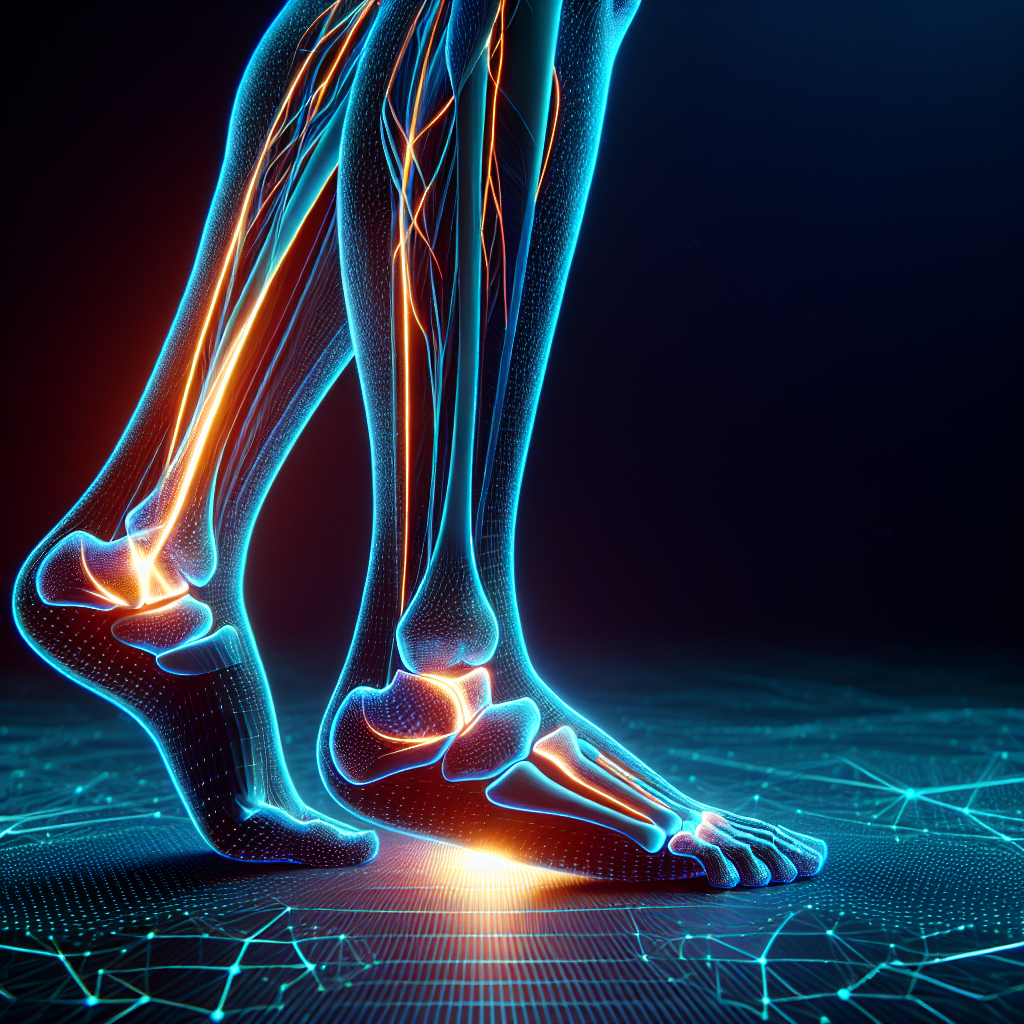
Why Plantar Flexion is Your Ultimate Movement Superpower
Have you ever wondered exactly what happens when you press the gas pedal in your car or stand on your tippy-toes to grab that coffee mug from the top shelf? That, my friend, is plantar flexion in action. It is the anatomical term for pointing your foot downward, away from your leg. I still remember walking the steep, wildly uneven cobblestone streets of Andriyivskyy Descent in Kyiv last summer. My calves were absolutely burning after just twenty minutes. It hit me right then—we completely take our ankle and foot mechanics for granted. Every single step we take on those historic Ukrainian slopes requires immense force from the back of the lower leg.
So, what exactly is happening under the skin? When you point your toes, you are engaging a massive network of muscles and tendons that literally carry you through life. As we navigate the fast-paced landscape of 2026, where ergonomic footwear and advanced biomechanics dominate the fitness conversation, understanding how your feet connect to the ground has never been more relevant. We are moving away from clunky, restrictive shoes and returning to natural foot functions. If you want to walk better, run faster, or just avoid those annoying ankle sprains, mastering this specific downward movement of the foot is absolutely essential. I promise, once you start paying attention to how your ankle hinges, you will feel a massive difference in your daily energy, overall balance, and joint mobility.
Understanding the Core: Benefits, Harm, and Proper Execution
Let me break down exactly why this anatomical hinge mechanism is the foundation of human movement. At its core, pointing your foot downward involves the gastrocnemius and soleus muscles (your calf), which pull on the thickest tendon in your body—the Achilles. When you lack strength here, everything above the ankle compensates. Your knees absorb more shock, your hips shift out of alignment, and suddenly your lower back aches after a short walk.
| Movement Type | Primary Muscles Fired | Real-Life Application |
|---|---|---|
| Plantar Flexion (Pointing down) | Gastrocnemius, Soleus, Plantaris | Jumping, pressing the gas pedal, walking upstairs |
| Dorsiflexion (Pulling up) | Tibialis Anterior | Lifting toes to clear a step, squatting deep |
| Inversion/Eversion (Rolling sides) | Tibialis Posterior, Peroneals | Stabilizing on uneven terrain, lateral sports cuts |
The value proposition of optimizing this movement is huge. First, think about running efficiency. A strong push-off from the ground means you expend less energy per stride, making your morning jog feel absolutely effortless. Second, consider daily driving and pedaling. Your ability to finely control the accelerator or brake pedal without cramping depends entirely on the endurance of these specific lower leg muscles. If you commute heavily, you need this strength just to get through traffic comfortably.
Here is a quick list of what you gain by training this specific downward toe-point:
- Unbreakable Balance: Strong calf muscles act like dynamic shock absorbers, constantly adjusting your center of gravity when you stand on one leg or slip on a wet floor.
- Explosive Athletic Push-Off: Whether you are playing casual tennis or sprinting for the bus, the final point of contact with the ground dictates your speed and acceleration.
- Bulletproof Injury Prevention: Most Achilles ruptures and ankle sprains happen because the connective tissues cannot handle sudden eccentric loads. Strengthening the downward push builds a protective shield around your ligaments.
The Evolutionary Journey of Human Foot Mechanics
If we really want to grasp the significance of our ankle anatomy, we need to rewind the clock. The way our feet function today is the result of millions of years of rigorous biological adaptation.
Origins of the Bipedal Stride
Long before paved roads or comfortable sneakers, our early ancestors had feet designed for gripping branches. As humans transitioned from trees to walking upright on the African savanna, the foot underwent a radical redesign. The toes shortened, the arch developed, and the heel bone grew larger. This allowed the calf muscles to act as a powerful lever system. Plantar flexion became the primary engine for forward propulsion. Without this specific downward thrust, outrunning predators or tracking prey across vast distances would have been biomechanically impossible.
The Era of Restrictive Footwear
Fast forward to recent centuries, and things took a weird turn. The invention of elevated heels, stiff leather boots, and heavily cushioned running shoes severely altered our natural movement patterns. For decades, shoes did the work of our tendons. Thick heel drops meant the calf muscles were constantly kept in a shortened state, leading to chronic tightness and weakened propulsion. People essentially forgot how to use their feet naturally, relying on synthetic foam to absorb shock and bounce them forward instead of using their own biomechanics.
The Modern State of Biomechanics in 2026
Now, here we are in 2026, and the fitness and medical communities have completely flipped the script. We are seeing a massive resurgence in minimalist footwear and barefoot training protocols. Technology is now used to map our exact foot strike, proving that restoring full, unhindered range of motion at the ankle is the key to longevity. Smart-insoles and wearable sensors track exactly how much force we generate during the push-off phase. The focus has shifted from artificially supporting the foot to genuinely strengthening the tissues responsible for the toe-point. It is all about reclaiming that primal elasticity.
The Biomechanics: How Your Body Pushes Down
Let me get a bit nerdy for a second and explain the raw science behind your calves. It is not just about muscle; it is a highly sophisticated system of levers, springs, and fast-firing neurological signals.
Neuromuscular Pathways and Leverage
Everything starts with the tibial nerve, a thick branch of the sciatic nerve that fires electrical signals straight down your leg. When you decide to stand on your toes, this nerve triggers the gastrocnemius (the meaty upper calf) and the soleus (the deeper, endurance-focused muscle beneath it). These muscles pull forcefully upward on the Achilles tendon. Because the tendon attaches to the calcaneus (heel bone), it creates a Class 1 lever system. Your toes act as the fulcrum, the ground provides resistance, and your calf supplies the effort. It is incredibly efficient, allowing you to lift your entire body weight with just a few cubic inches of muscle tissue.
Tendon Elasticity and Kinetic Energy
Your Achilles tendon is not just a rope; it is a thick, biological rubber band. When your foot hits the ground, the tendon stretches, storing kinetic energy. As you roll onto your toes to push off, the tendon aggressively snaps back to its original length, releasing that stored energy. This is called the stretch-shortening cycle.
Here are some wild scientific facts about this biomechanical action:
- Your Achilles tendon can endure forces equal to three to ten times your body weight during explosive running, jumping, or landing.
- The soleus muscle contains a massive proportion of slow-twitch muscle fibers, meaning it is specifically designed to hold you upright against gravity all day long without fatiguing.
- The gastrocnemius crosses both the knee and the ankle joint, meaning its ability to point your foot changes depending on whether your knee is bent or totally straight.
- A five percent increase in your calf strength can yield a measurable decrease in the oxygen cost of running, making your cardiovascular system work less for the exact same speed.
Your 7-Day Plantar Flexion Strengthening Protocol
Alright, enough theory. If you want to bulletproof your lower legs, you need a highly specific plan. I have put together a robust, progressive 7-day protocol designed to maximize your ankle power, flexibility, and overall tissue resilience. Follow this strictly, and you will notice a huge difference.
Day 1: Baseline Assessment and Isometric Holds
Start by testing your baseline. Stand on one leg near a wall for balance and perform as many single-leg calf raises as you can. Note the number. Once done, perform 3 sets of 45-second isometric holds at the very top of a calf raise. Squeeze the muscle as hard as possible. This builds neurological drive without causing too much muscle damage.
Day 2: Eccentric Loading and Control
Today is all about the lengthening phase, which is crucial for tendon health. Stand on a stair with your heels hanging off. Push up using both feet, but slowly lower yourself down using only one foot over a slow 5-second count. Do 3 sets of 10 reps per leg. Your calves will absolutely be sore tomorrow!
Day 3: Explosive Power Training
We need to train your fast-twitch fibers today. Grab a jump rope and aim for 5 sets of 2 minutes. Focus on springing off the ground as quickly as possible. Keep your knees relatively straight so the ankles do all the work. If you do not have a rope, perform rapid pogo jumps in place.
Day 4: Active Recovery and Stretching
After yesterday’s plyometrics, your tissues need blood flow without heavy loads. Spend today doing light walking and targeted stretching. Use a slant board or a rolled-up towel to gently stretch your calves. Hold the stretches for 60 seconds each. Foam rolling the fleshy part of the calf is highly recommended today.
Day 5: Endurance Protocol (The Soleus Burn)
Since the soleus muscle works best when the knee is bent, today we do seated calf raises. Sit on a chair, place a heavy dumbbell or kettlebell on your knees, and lift your heels high. Perform high repetitions here—aim for 4 sets of 25 to 30 reps. It should burn immensely.
Day 6: Barefoot Integration
Take off your shoes and socks. Spend 20 to 30 minutes walking around a safe environment—like a grassy park or a clean gym floor—completely barefoot. Focus intentionally on pushing the ground away with your toes on every single step. This re-educates the smaller intrinsic foot muscles to support the primary flexors.
Day 7: Complex Multi-joint Movements
Tie it all together. Incorporate movements that require full-body coordination. Perform heavy farmer walks on your toes, or do walking lunges where you aggressively push off the back foot. You are integrating the isolated strength you built all week into functional, real-world mechanics.
Busting Common Ankle and Calf Myths
There is a lot of terrible advice floating around the internet about lower leg training. Let me clear the air and destroy some persistent nonsense.
Myth: Plantar flexion is only something ballet dancers and gymnasts need to care about.
Reality: Every single time you take a step, press a car pedal, or reach for a high shelf, you are relying on this exact movement. It is a fundamental human requirement, not an elite sports skill.
Myth: You should completely avoid training your calves if you have knee pain.
Reality: It is actually the exact opposite! Weak ankles and calves fail to absorb the shock of walking, forcing your knee joint to take the brutal impact. Strengthening the lower leg acts as a buffer, directly reducing knee strain.
Myth: Aggressive static stretching is the absolute best way to fix tight, restricted ankles.
Reality: While stretching feels nice, eccentric strength training (slowly lowering a weight under tension) actually alters the architecture of the muscle fibers, creating long-lasting mobility and preventing future stiffness much better than passive stretching ever could.
Myth: Wearing high heels improves your ability to point your toes naturally.
Reality: High heels force your foot into a passive, artificial downward angle. Over time, this physically shortens the Achilles tendon and weakens the calf muscles, making natural barefoot movement incredibly difficult and painful.
Rapid-Fire Q&A
Still have questions? I receive these all the time. Here are the quick, direct answers you need.
What is the exact opposite of plantar flexion?
The opposite movement is called dorsiflexion. That is when you pull your toes upward toward your shin. Both motions need to be equally strong for a balanced, healthy joint.
Can I train this specific movement every single day?
Your calves are highly resilient because they carry you around constantly. Yes, you can do light training daily, but limit heavy, loaded workouts to two or three times a week to allow for proper recovery.
Why do my calves randomly cramp when I point my toes in bed?
This usually happens due to muscle fatigue, dehydration, or an imbalance of electrolytes like magnesium and potassium. Stretching before bed usually helps mitigate these annoying spasms.
Does long-distance running rely heavily on this anatomical action?
Absolutely. While the glutes and quads do a lot of work, the final push-off of every running stride comes strictly from your ankle extending downward.
What gym equipment is the best for 2026 workouts?
The trend this year is definitely smart-resistance slant boards that track your force output, but honestly, a simple staircase and a heavy dumbbell will always get the job done flawlessly.
How does this movement impact my overall standing posture?
If your calves are tight and permanently locked in a downward angle, your pelvis tilts forward to compensate, which often creates severe lower back pain over time.
Is it totally safe to do heavy, loaded calf raises?
Yes, provided you control the tempo. Bouncing heavy weights can rupture your Achilles. Always lift smoothly and lower the weight with extreme control.
Can chronic weak ankles genuinely cause severe lower back pain?
One hundred percent. If the foot fails to stabilize the ground, the knee wobbles, the hip shifts, and the lower back absorbs all the chaotic rotational forces. Everything is connected.
Well, there you have it! Mastering the mechanics of plantar flexion is your secret weapon for moving pain-free and maximizing your athletic potential. Whether you are sprinting on a track or just taking a quiet evening walk, your calves are the unsung heroes of your journey. Do not neglect them. Start your Day 1 protocol today, stay consistent, and give your feet the respect and strength they truly deserve!




Leave a Reply