

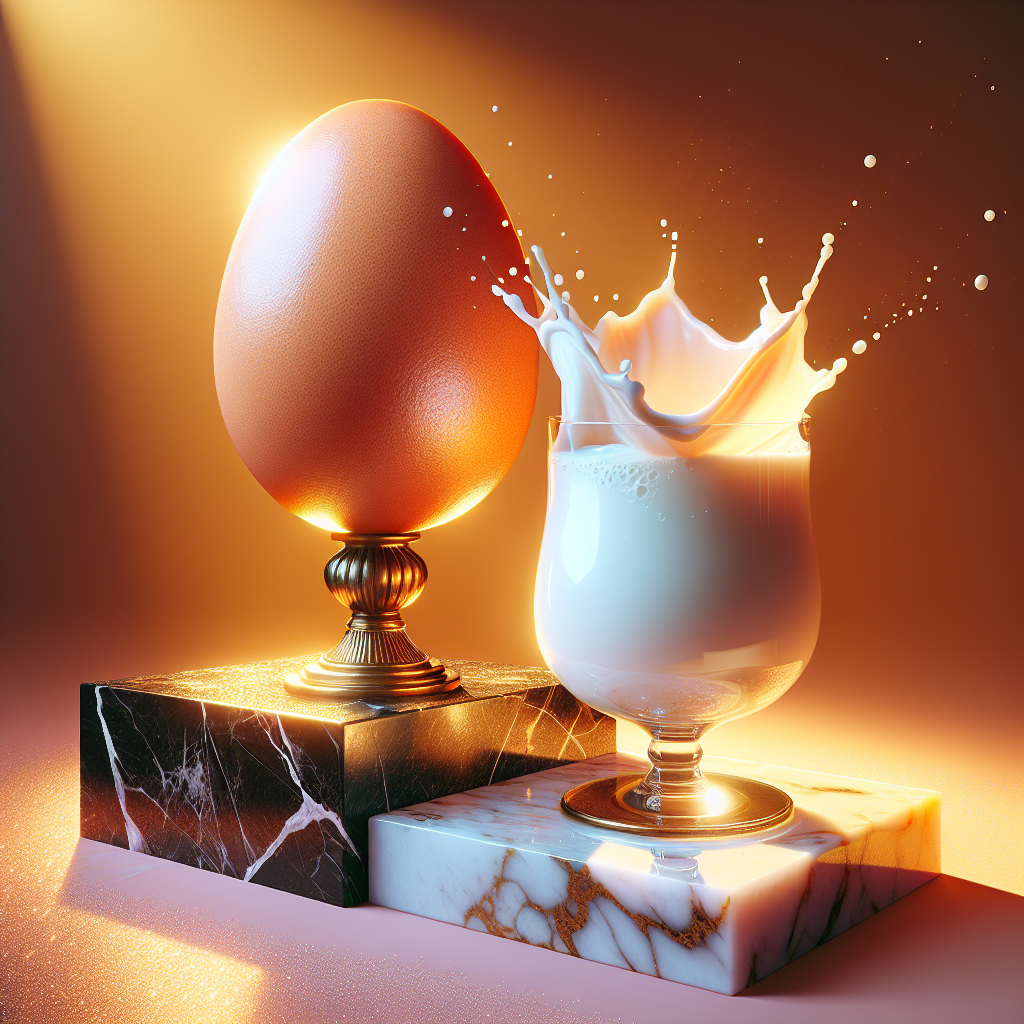
Are Eggs Dairy? Let’s Solve the Grocery Aisle Mystery
Have you ever stood in the refrigerated section of your local supermarket, staring at a carton of eggs right next to the milk, and thought, are eggs dairy? You are definitely not alone in asking this. Even in 2026, with all the advanced nutritional apps and AI diet trackers available on our phones, this simple question trips up thousands of people every single day. The confusion is completely understandable.
I remember visiting a bustling outdoor bazaar in Lviv, Ukraine, where local farmers from the surrounding villages bring their fresh morning goods. You would see an older woman, a traditional babusya, selling thick, rich sour cream (smetana) directly beside a massive woven basket filled with farm-fresh chicken eggs. Since both products come straight from the farm and are almost always chilled, our human brains naturally group them together as identical types of food. However, biologically and nutritionally, they exist in entirely different universes.
The ultimate truth is straightforward: Eggs are absolutely not dairy. They do not contain lactose, they do not come from mammals, and they will not trigger a milk allergy. By understanding exactly what makes a food “dairy,” you can navigate your dietary restrictions with total confidence and stop second-guessing your morning breakfast choices entirely.
The Fundamental Difference Between Eggs and Dairy
We can explain the exact meaning of these food categories so you never have to wonder again. Dairy products strictly refer to the milk produced by the mammary glands of mammals. This biological family includes cows, goats, sheep, buffalo, and even camels. If you take that milk and process it into cheese, yogurt, butter, or ice cream, it firmly remains in the dairy family.
Eggs, on the other hand, are laid by birds. The ones we eat mostly come from chickens, though quail, duck, and ostrich eggs follow the exact same biological rules. Birds do not have mammary glands. They do not produce milk. Therefore, their byproducts cannot possibly be categorized as dairy.
Understanding this distinction provides massive value for anyone managing their daily diet. Here are two specific examples of why this matters:
First, if you are lactose intolerant, you lack the enzyme to break down milk sugars. Since eggs have zero lactose, you can comfortably eat a massive omelet without experiencing any of those dreaded digestive issues. Second, if you are following a strict Kosher diet, mixing meat and dairy is religiously prohibited. However, eggs are considered pareve (neutral), meaning you can safely eat them alongside a steak without breaking dietary laws.
To make things incredibly clear, review this data table:
| Feature | Eggs | Dairy |
|---|---|---|
| Biological Source | Birds (Chickens, Ducks, Quail) | Mammals (Cows, Goats, Sheep) |
| Lactose Content | 0% (Completely Lactose-Free) | High (Unless specifically filtered) |
| Primary Protein Type | Ovalbumin | Casein and Whey |
| Dietary Classification | Protein / Meat Alternative | Dairy / Milk Products |
So why do so many smart people still get it wrong? Here are the top reasons the confusion simply refuses to die out:
- Supermarket Layouts: Almost every grocery store places eggs directly across from the milk and butter because they all require commercial refrigeration. We naturally associate things placed next to each other.
- The “Farm Fresh” Umbrella: Children’s books, television commercials, and farmyard cartoons almost always group egg collection and cow milking together as the primary morning chores on a farm.
- Baking Recipes: Most traditional baking recipes call for “wet ingredients” which almost always feature a combination of milk, butter, and eggs mixed together in one bowl.
Origins of the Dairy Aisle
To truly grasp why we even associate eggs with milk, we have to travel back in time. Long before massive modern supermarkets existed, food delivery was highly localized. In the early to mid-20th century, the neighborhood milkman was a staple of suburban and urban life. Because milkmen had direct access to daily farm goods, they started carrying fresh eggs along with their heavy glass bottles of milk. This highly practical delivery model firmly linked the two items in the public consciousness. People mentally categorized them as “the fresh farm stuff the milkman brings every morning.”
Evolution of Food Group Classifications
As governments began issuing early nutritional guidelines, the confusion actually deepened rather than cleared up. Early dietary pyramids often grouped eggs, meat, and dairy close together under the overly broad banner of “protein-rich animal products.” It was not until later decades that refined nutritional science demanded a clearer separation. The United States Department of Agriculture (USDA) eventually split them up, placing dairy in its own distinct category while tossing eggs into the protein group alongside meat, poultry, and fish. Yet, deep cultural habits are tough to break. Consumers continued to think of eggs and milk as siblings rather than distant nutritional cousins.
Modern State of Supermarkets in 2026
Fast forward to the year 2026, and the retail landscape is heavily optimized by aggressive consumer behavior algorithms. Supermarkets have massive data proving that when you buy bacon, you want eggs, and when you buy cereal, you want milk. The refrigerated zone—often labeled entirely as the “dairy case” on the aisle signs—remains the cold storage hub for all these daily perishables. Retailers prioritize maximum energy efficiency over biological accuracy. Grouping all items that need to be kept below 40 degrees Fahrenheit (4 degrees Celsius) in one massive aisle saves the store thousands in cooling costs. So, while dietitians scream from the rooftops that eggs are not dairy, store managers will happily keep stocking them right next to the cheddar cheese to save a buck.
The Biological Mechanics of Egg Production
If you want the absolute scientific truth behind this separation, we need to examine basic biology. A hen’s reproductive system is a fascinating natural assembly line. When a hen releases an ovum (the yolk), it travels down the oviduct where the albumen (the egg white) is carefully layered around it. Finally, a specialized shell gland deposits solid calcium carbonate to form the hard outer shell. This entire process takes roughly 24 to 26 hours. There are absolutely no milk ducts, no lactose sugars, and no mammalian hormones involved anywhere in this biological process. The unique proteins formed are specifically designed to nourish a growing avian embryo inside a sealed environment, which requires a totally different nutritional profile than a nursing mammalian calf.
Lactose and Dairy Science Explained
Dairy production is entirely driven by the process of lactation. When a cow gives birth, her mammary glands produce milk rich in a specific sugar called lactose, alongside proteins like casein and whey. Lactose requires a specific enzyme—lactase—to be digested properly in the human stomach. This is pure mammalian science. Because birds operate on an entirely different evolutionary branch, the chemical composition of their byproducts shares practically zero overlap with milk.
Here are several hard scientific facts highlighting these differences:
- Carbohydrate Structure: Dairy naturally contains lactose (a complex disaccharide sugar), whereas eggs contain only microscopic trace amounts of simple glucose.
- Allergen Profiles: Severe milk allergies are typically triggered by Alpha-S1-casein. Egg allergies, conversely, are triggered by entirely different proteins called ovomucoid, ovalbumin, and ovotransferrin found mostly in the egg white.
- Calcium Delivery: A cow delivers calcium directly into the liquid milk for the rapid skeletal growth of its young. A chicken uses calcium almost exclusively to build the protective outer shell, meaning the edible portion of the egg is actually quite low in dietary calcium.
- Cholesterol Ratios: Eggs are naturally high in dietary cholesterol concentrated heavily in the yolk, while milk’s cholesterol content is tied directly to its saturated butterfat percentage.
Your 7-Day Dairy-Free, Egg-Inclusive Meal Plan
Many people ask about this topic because they are actively trying to eliminate dairy but want to safely keep the high-quality protein of eggs in their daily routine. Here is a foolproof, highly actionable 7-day menu designed for exactly that goal.
Day 1: The Classic Start
Begin your week with a robust, energy-packed breakfast. Scramble three eggs using olive oil or virgin coconut oil instead of butter. Toss in a large handful of fresh spinach and halved cherry tomatoes. This meal gives you a massive protein boost with zero dairy interference. For lunch, enjoy a grilled chicken salad with two hard-boiled eggs sliced right on top.
Day 2: The Baking Swap
Today, focus on learning how eggs function brilliantly in dairy-free baking. Make a batch of morning muffins using unsweetened almond milk, mashed ripe bananas, and two whole eggs. The eggs provide all the necessary binding and leavening that you need without requiring a single drop of cow’s milk.
Day 3: The Mediterranean Approach
Embrace healthy, heart-safe fats. Fry your eggs sunny-side-up in extra virgin olive oil, a massive staple of the Mediterranean diet. Serve them alongside a crisp cucumber and kalamata olive salad. The natural richness of the liquid egg yolk entirely mimics the creamy texture of melted cheese, making you forget dairy entirely.
Day 4: The Dinner Omelet
Who says eggs are only meant for the morning? Whip up a hearty, massive dinner omelet stuffed with leftover roasted vegetables, caramelized onions, and diced smoked ham. Cook it in a large non-stick skillet with a splash of avocado oil. You get a savory, deeply satisfying meal that is 100% lactose-free.
Day 5: The Asian Inspiration
Traditional Asian cuisines are naturally exceptionally low in dairy but heavily feature eggs. Make a quick dairy-free vegetable fried rice for dinner. Use day-old jasmine rice, peas, carrots, low-sodium soy sauce, and simply push everything to the side of the wok to scramble a couple of eggs right in the hot pan.
Day 6: The Snack Prep
Boil a full dozen eggs today for your upcoming weekend meal prep. Hard-boiled eggs are the ultimate portable, dairy-free snack. They are conveniently wrapped in their own natural, biodegradable packaging. Simply peel them and sprinkle with smoked paprika or everything-bagel seasoning for extra intense flavor.
Day 7: The Sunday Brunch
Finish the week with a spectacular sourdough avocado toast generously topped with perfectly poached eggs. Squeeze some fresh lemon juice over the top and add crushed red chili flakes. The creamy mashed avocado perfectly replaces any need for cream cheese or butter, and the runny yolk provides a luxurious, rich sauce.
Debunking the Biggest Food Myths
Misinformation spreads wildly fast, especially online. We can clear up the most persistent myths surrounding our grocery choices right now.
Myth: Eggs have a little bit of lactose hidden in them.
Reality: Eggs contain absolutely zero lactose. Lactose is a specific sugar found exclusively in mammalian milk. You can eat eggs completely freely if you are diagnosed as lactose intolerant.
Myth: Vegans can easily eat eggs because they are not dairy.
Reality: While it is true they are not dairy, vegans strictly do not consume any animal products whatsoever. Since eggs come directly from chickens, they are classified as an animal byproduct and are strictly excluded from a true vegan diet.
Myth: Mayonnaise is a dairy product because it is white and creamy.
Reality: Traditional mayonnaise is made purely from a tight emulsion of oil, raw egg yolks, vinegar, and mustard. There is absolutely no milk, butter, or cream in real mayonnaise, making it completely dairy-free.
Myth: If you have a severe milk allergy, you should actively avoid eggs just to be safe.
Reality: The proteins that trigger a severe milk allergy (like casein) are biologically completely different from those that trigger an egg allergy (like ovalbumin). Having one allergy does not automatically mean you have the other.
Frequently Asked Questions
Is butter dairy?
Yes, butter is made directly from churned cow’s cream. It is absolutely a pure dairy product and contains trace amounts of lactose, though much less than a glass of milk.
Are eggs considered meat?
No, they are scientifically classified as an animal byproduct. They fall into the “protein” food group alongside meat for nutritional reasons, but they are not the flesh of the animal itself.
Does lactose intolerance apply to eggs?
Not at all. Since there is zero lactose inside an egg, your digestive system will handle it perfectly fine without needing any lactase enzymes.
Are eggs poultry?
They are a product of poultry, but they are not poultry meat. The term poultry refers specifically to the edible flesh of domestic birds like chicken, turkey, and duck.
Can I eat eggs if I’m allergic to milk?
Yes. Unless your doctor has diagnosed you with a separate, highly specific allergy to eggs, they are completely safe to consume if your only issue is a milk allergy.
Is cheese dairy?
Yes, cheese is made by coagulating the milk protein casein. It is a core dairy item, regardless of whether it is made from cow, goat, or sheep milk.
Are eggs vegetarian?
Yes, they are widely considered vegetarian (specifically lacto-ovo vegetarian) because consuming unfertilized eggs does not require the slaughter or death of the animal.
Final Thoughts
Navigating the wonderfully complex world of daily nutrition does not have to be an overwhelming chore. You now possess the definitive, scientific answer: eggs are absolutely not dairy. Whether you are walking through a lively farmer’s market in Ukraine or pushing a heavy metal cart through a high-tech mega-supermarket in 2026, you can clearly and confidently separate the mammalian milk products from the avian poultry byproducts. Understanding this simple biological fact empowers you to make radically smarter dietary choices, effortlessly avoid unnecessary allergen fears, and enjoy your food with total peace of mind. Share this ultimate breakdown with that one stubborn friend who still insists mayonnaise has milk in it, and start planning your next delicious, perfectly dairy-free breakfast right now!





Leave a Reply