

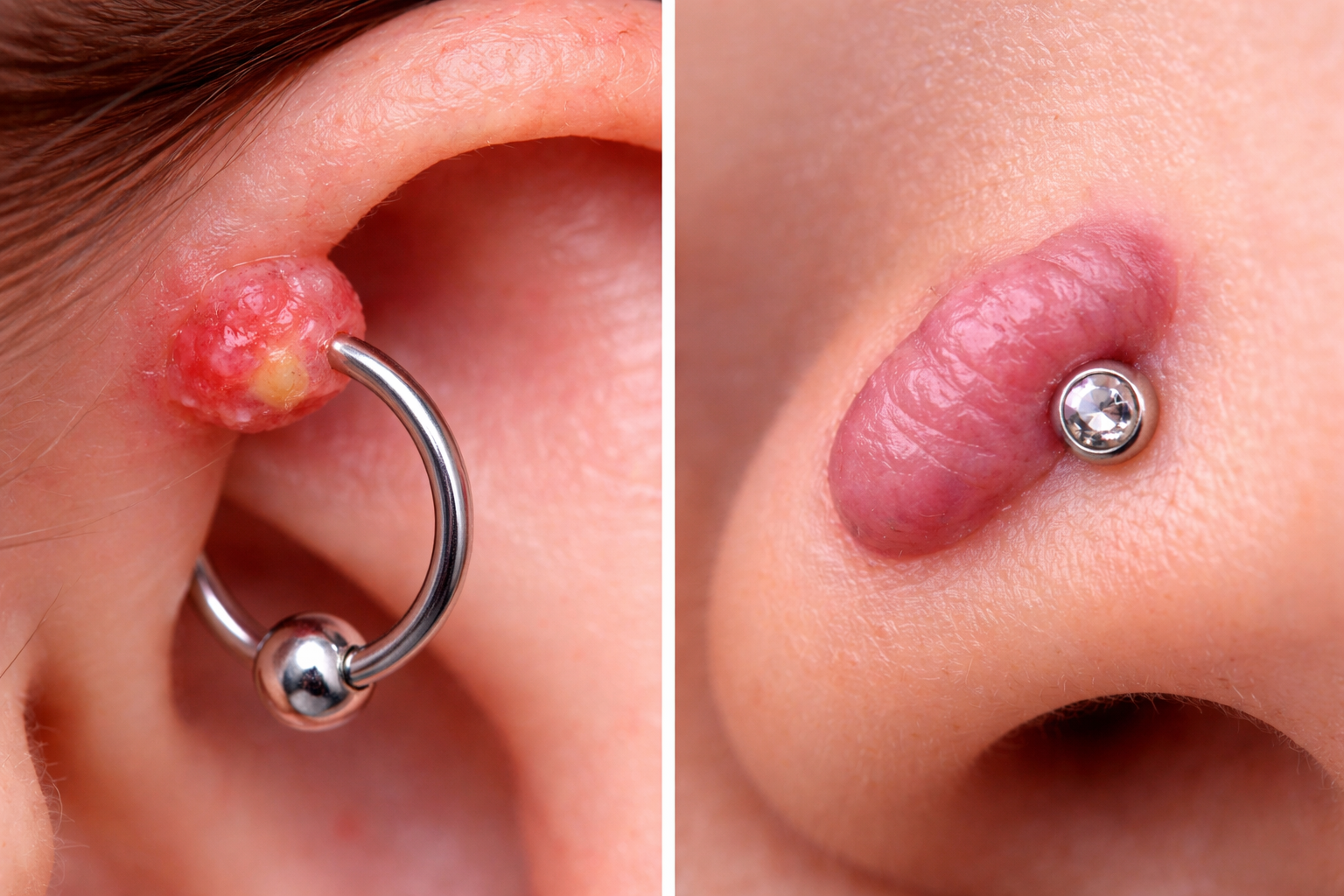
If you’ve got a raised spot around a piercing, chances are you’ve already done the same thing almost everyone does: stared at it in the mirror, typed “keloid?” into your phone, and felt your stomach drop a little. That reaction makes sense. A bump on a piercing can look dramatic fast, especially on an ear, nose, or cartilage piercing where even a small change feels obvious. But here’s the part that calms things down: not every piercing bump is a keloid. Not even close.
This is where the confusion starts. Online, people use the word “keloid” for almost any piercing bump. That’s understandable, but it’s not accurate. A true keloid is a specific kind of scar. It behaves differently. It grows differently. And it usually needs a different plan than a plain irritation bump or a hypertrophic scar. If you treat all three like they’re the same thing, you can end up doing too much, doing the wrong thing, or panicking before you need to.
And honestly, panic is common here. Piercings live on visible parts of the body. They’re tied to identity, style, and in a weird way, hope. You got the piercing because you wanted it to look good. So when it suddenly grows a little angry-looking bump, it feels personal. That’s normal. But a calm, practical read is usually more helpful than doom-scrolling pictures at 1 a.m.
The useful question is not “Is every bump dangerous?” It’s “What kind of bump is this actually acting like?” That’s the whole game.
This guide breaks down the difference between an irritation bump, a hypertrophic scar, and a true keloid. It also covers what makes one more likely than the other, what you can safely do at home, what usually makes things worse, and when it’s time to call a dermatologist or doctor instead of experimenting on your face or ear with random advice from the internet.
First things first: what people usually mean by “piercing bump”
When most people say “piercing bump,” they’re usually talking about a small raised area right around the piercing opening. It may look pink, red, or flesh-colored. It may come and go. It may feel tender one week and calmer the next. Sometimes it looks shiny. Sometimes it looks like a tiny angry pimple. Sometimes it seems to shrink, then flare again because you slept on it funny or snagged it on a hoodie.
That type of bump is often irritation. Not elegant, but true. The piercing is annoyed. Something about the environment, the jewelry, the pressure, or the aftercare keeps poking at the healing tissue. In a lot of cases, that’s the most boring explanation. It also happens to be the most useful one.
Common irritation triggers include:
- Jewelry that’s too long, too short, or the wrong shape for the placement
- Sleeping on the piercing, especially cartilage or nose piercings
- Snagging it on towels, shirts, hair, or headphones
- Rotating, twisting, or playing with the jewelry
- Over-cleaning or using harsh products like alcohol or hydrogen peroxide
- Nickel sensitivity or reaction to poor-quality jewelry
- Pressure from masks, helmets, hats, or phones
That list matters because irritation bumps often improve when the actual source of irritation gets fixed. That is very different from a true keloid, which doesn’t usually back down just because you switched pillows and stopped touching your jewelry.
Now the tricky middle ground: hypertrophic scar
A lot of bumps people call keloids are actually closer to hypertrophic scars. This is the category that sits between “just irritated” and “true keloid.” It is still scar tissue. It is still raised. It can still look dramatic. But it behaves differently from a keloid in one major way: it stays within the border of the original wound.
That’s the key line. A hypertrophic scar stays in its lane. It rises, thickens, and can look red or pink, but it doesn’t keep spreading outward into the surrounding skin the way a keloid can. It may also soften or flatten over time, especially if the irritation stops and the piercing heals well.
This is one reason piercing bumps are so easy to misread. A hypertrophic scar can look serious if you don’t know what you’re seeing. It’s raised. It’s stubborn. It may show up a month or two after the trauma. So people jump straight to “keloid.” But that jump skips the most important clue: boundaries.
If the raised tissue is still confined to the original piercing channel area, hypertrophic scarring is usually a better fit than a true keloid.
What a true keloid actually does
A true keloid is a raised scar that grows beyond the original injury. That “beyond” part is everything. It doesn’t just sit on the piercing site. It expands past it. It may keep getting thicker, wider, rounder, or more rubbery over time. It may itch. It may feel tender. It may look smooth and shiny. And unlike an irritation bump, it doesn’t usually act like a moody healing problem that flares and settles based on how well you slept or whether your jewelry got bumped.
Keloids also tend to show up later. Not always instantly. Months can pass before they become clearly noticeable, and once they start, they often keep growing slowly. That slow, steady growth is one of the clues people miss. Irritation bumps feel noisy. Keloids feel persistent.
They also have a stronger personal risk pattern. If you or close blood relatives form keloids, that history matters. If you’ve had a keloid before, that matters. And yes, keloids are more common in some people with darker skin tones and often develop between ages 10 and 30.
That doesn’t mean every bump in a high-risk person is automatically a keloid. It just means the threshold for getting it checked should be lower.
| Feature | Irritation bump | Hypertrophic scar | True keloid |
|---|---|---|---|
| Where it stays | Right around the piercing | Within the original wound border | Grows beyond the original wound |
| Timing | Often during active healing | Often appears within weeks to months | May appear later and grow for months or longer |
| Cause | Friction, pressure, jewelry, aftercare issues | Overactive scar response in the wound | Abnormal scar growth beyond the injury |
| Can it shrink with better piercing care? | Often, yes | Sometimes, yes | Usually not on its own |
| Texture | Soft, inflamed, or pimple-like | Firm and raised | Firm, rubbery, smooth, often shiny |
| Best next step | Reduce irritation, check jewelry, gentle care | Watch closely, reduce trauma, get medical advice if persistent | Dermatology evaluation |
What makes a bump lean more toward “not a keloid”
There are a few patterns that should make you think irritation first, not keloid first. If the bump changes size week to week, especially after pressure or snagging, that points more toward irritation. If it sits right at the piercing hole and doesn’t spread outward, same story. If it’s tied to low-quality jewelry, a bad angle, over-cleaning, or sleeping directly on the site, again, that sounds more like a distressed piercing than a true keloid.
Here are the clues that push the needle toward irritation or hypertrophic scarring:
- The bump stays close to the piercing opening
- It flares after pressure, jewelry movement, or trauma
- It appeared during the healing window, not many months later
- The piercing jewelry feels wrong, catches a lot, or never got downsized
- The area has been over-cleaned, twisted, or treated with harsh products
In other words, if the bump behaves like a healing wound that keeps getting annoyed, believe that clue. Don’t skip straight to the rarest, scariest explanation.
What makes a bump lean more toward a true keloid
Now for the other side. There are times when “maybe it’s just irritated” becomes less convincing. If the raised area keeps enlarging past the original piercing site, feels firm or rubbery, looks smooth and shiny, and doesn’t calm down after obvious irritation is removed, that deserves a more serious look. Family history also matters here, because keloid-prone skin tends to repeat itself.
Signs that should make you think “get a dermatologist involved” include:
- The growth clearly extends beyond the original piercing hole
- It keeps getting bigger over time instead of rising and settling
- It feels rubbery or unusually firm
- It itches or feels tender as it grows
- You or close relatives have had keloids before
- The area looks more like a scar mass than a small irritated bump
A true keloid is not something you want to self-treat with trial-and-error internet hacks. Not because it’s dangerous in the dramatic sense, but because early, proper treatment usually gives you a better shot at controlling it before it gets larger and harder to treat.
The infection question, because that confuses everything
Some people are not dealing with a scar issue at all. They are dealing with infection, or at least an inflamed piercing that is edging in that direction. This matters because scar tissue and infection can overlap visually when you’re stressed and looking at an angry piercing in bad bathroom lighting.
A piercing problem leans more toward infection if the area is hot, increasingly red, more swollen, more painful, or draining thick yellow, green, or gray gunk that smells bad. Fever, chills, red streaks, or feeling generally sick are bigger warning signs and should not be brushed off.
That’s why “just take the jewelry out” is not always smart advice. If you truly have an infection, removing the jewelry on your own can sometimes complicate drainage or close the surface too quickly. If you suspect infection, the better move is to get medical guidance, especially for cartilage piercings, which can get serious faster than people expect.
| If you see this | It points more toward | Best next move |
|---|---|---|
| Small bump that flares with pressure or jewelry trauma | Irritation bump | Check jewelry fit, reduce trauma, use gentle saline care |
| Raised scar staying within the piercing border | Hypertrophic scar | Reduce irritation and get medical advice if it persists |
| Firm scar growing beyond the original wound | Keloid | See a dermatologist |
| Heat, increasing redness, foul or thick discharge, fever | Possible infection | Seek medical care promptly |
What to do if it looks like a basic piercing bump
If the bump seems more like irritation than a true keloid, the first goal is boring but effective: make the area less irritated. That means less touching, less pressure, less drama, and better jewelry logic. Piercings are fussy little wounds healing around a foreign object. Once you remember that, their behavior makes more sense.
Good first steps are usually these:
- Leave the jewelry alone except for gentle cleaning
- Use sterile saline wound wash, not homemade strong salt mixes
- Do not twist, spin, or rotate the jewelry
- Stop using alcohol, hydrogen peroxide, iodine, ointments, or harsh soaps
- Try to remove obvious friction, like sleeping on the area or snagging it on clothes
- Have a reputable piercer check whether the jewelry needs downsizing or a material change
That jewelry check is huge. A lot of bumps keep coming back because the jewelry is the problem, not because the body “can’t handle piercings.” Jewelry that is too long can move too much. Jewelry that is too short can compress swelling. Jewelry made with irritating alloys can trigger contact dermatitis. And a bad angle can keep the whole site in a low-grade state of complaint.
This is why a good piercer is worth more than a bag of internet hacks. Sometimes the problem is not mystical at all. The bar is just wrong.
What usually makes the bump worse
Here’s the annoying part: people often irritate a piercing while trying to save it. They clean too much. They scrub. They rotate the jewelry because an old aftercare myth told them to. They switch products every three days. They put oils, ointments, alcohol, peroxide, aspirin paste, toothpaste — yes, really — on a healing wound and then wonder why the tissue looks offended.
That cycle is common, and it’s fixable.
Things that often make a bump worse include:
- Over-cleaning
- Using harsh disinfectants instead of gentle saline
- Touching it all day to “check” whether it changed
- Sleeping directly on cartilage piercings
- Changing jewelry too early
- Taking jewelry out impulsively without understanding the problem
Honestly, one of the hardest parts of piercing aftercare is learning to stop fussing with it. A lot of healing improves once people stop trying to win an argument with the wound.
What dermatologists usually do for real keloids
If the growth is a true keloid, home care is not usually enough. Dermatologists often treat keloids with options like corticosteroid injections, pressure therapy in some ear cases, freezing, lasers, or surgery paired with other treatments. That combination piece matters because keloids can come back, and one treatment alone is not always enough.
This is also why getting the diagnosis right matters. If you call everything a keloid, you may overreact. If you call a true keloid “just a piercing bump,” you may lose time while it keeps growing. Neither is ideal.
And yes, some other conditions can mimic a keloid or scar, including allergic reactions and, more rarely, other skin growths. So if something looks strange, grows fast, or just doesn’t fit the usual pattern, getting expert eyes on it is not overkill. It’s smart.
When you should stop guessing and get help
You do not need a doctor for every little bit of crust or swelling during a fresh piercing. Some tenderness, mild swelling, and a bit of whitish-yellow crust can be normal during healing. But there is a point where guessing stops being useful.
Get checked sooner if:
- The growth keeps expanding beyond the piercing site
- You have severe redness, heat, worsening pain, or bad-smelling thick discharge
- You have fever, chills, or red streaking
- The bump is large, firm, shiny, and steadily enlarging
- You have a personal or family history of keloids
- You’ve tried reducing irritation and nothing is improving
And if it’s a cartilage piercing on the upper ear or nose that looks increasingly angry, don’t sit on it too long. Cartilage problems can get nastier than lobe issues, and they deserve quicker attention.
FAQ
How can I tell if my piercing bump is a keloid?
A true keloid usually grows beyond the original piercing wound, feels firm or rubbery, and keeps enlarging over time. A basic piercing bump usually stays close to the hole and often changes with irritation or pressure.
Is a piercing bump the same as a hypertrophic scar?
Not always. A piercing bump is a broad everyday term. Some bumps are irritation. Some are hypergranulation or small inflamed bumps. Some are hypertrophic scars, which are raised but stay within the original wound area.
Do keloids go away on their own?
Usually no. True keloids do not typically fade away on their own the way some irritated bumps or hypertrophic scars can soften over time.
Should I remove my jewelry if I think it’s a keloid?
Don’t make a snap decision on your own. If it may be a keloid, get a dermatologist or experienced professional to look at it. If it may be infected, removing jewelry without guidance can sometimes make things worse.
What is the best care for a normal irritation bump?
Gentle sterile saline care, less touching, no rotating, less pressure, and a check with a reputable piercer to make sure the jewelry size, style, angle, and material are right.
Can poor jewelry cause a piercing bump?
Yes. Poor fit, the wrong shape, or irritating metal can all contribute to ongoing friction and irritation around a healing piercing.
When should I see a doctor for a piercing bump?
See a doctor if the area is hot, very painful, draining thick foul-smelling discharge, causing fever, or if the growth clearly extends past the original piercing and keeps enlarging.
Conclusion
The big takeaway is simple. A piercing bump and a keloid are not interchangeable terms. A bump around jewelry is often irritation or, sometimes, a hypertrophic scar. A true keloid is a distinct scar that grows beyond the original wound and usually needs a dermatologist, not a DIY fix.
That difference matters because the next move changes with the diagnosis. Irritation wants less trauma, better aftercare, and often a jewelry check. Hypertrophic scarring wants patience and pressure off the area. A true keloid wants medical treatment, especially if it is growing.
So if your piercing has a bump, try not to jump straight to the scariest label. Look at the pattern. Look at the border. Look at whether it calms down when the irritation does. And if it keeps growing, feels rubbery, or stretches past the piercing itself, let a dermatologist call it what it is.
That’s the calmer way to handle it. Usually, it’s also the smarter one.



Leave a Reply