

If you’ve just finished braces or aligners, there’s a good chance you’ve heard the same line everyone hears: now comes the important part. And yeah, that can feel a little unfair. You did the appointments, the trays, the tightening, the sore teeth, the “sorry, I can’t eat that” phase — and now someone is telling you the real work starts after treatment ends. But that’s kind of how orthodontics goes. Straightening teeth is one thing. Keeping them there is another.
That’s where the permanent retainer comes in.
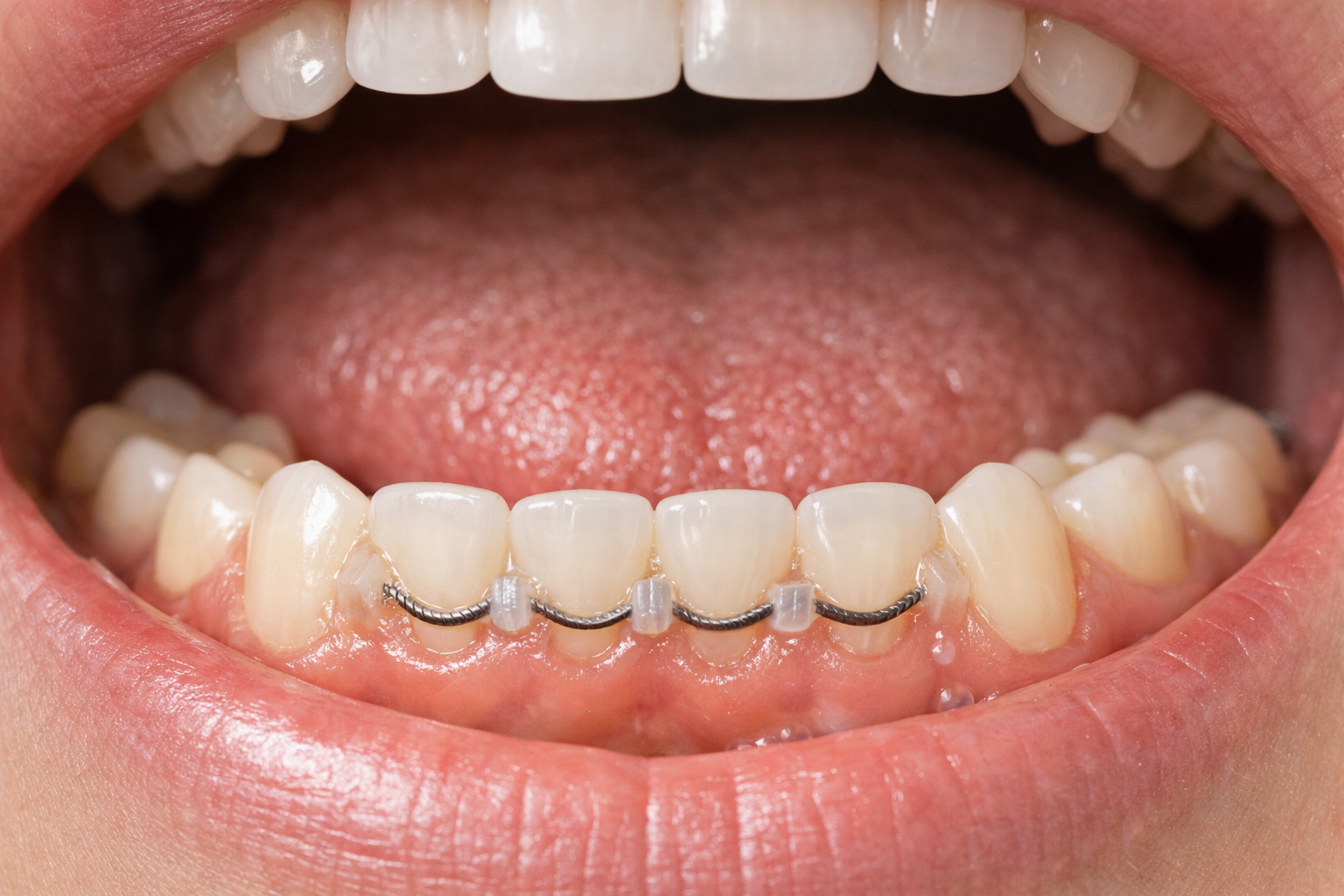
A permanent retainer, also called a fixed retainer or bonded retainer, is a thin wire attached to the back of your teeth, usually the lower front teeth and sometimes the upper front teeth too. It sits on the tongue side, so most people don’t see it when you talk or smile. That’s part of the appeal. It stays in place all the time, so you don’t have to remember to put it in before bed. You can’t leave it on a napkin at a restaurant. You can’t forget it in a hotel bathroom. It’s just there, doing its job quietly.
At least, that’s the sales pitch.
And honestly, the sales pitch is not wrong. Fixed retainers can be great. They’re one of the best ways to keep lower front teeth from slowly crowding again. They remove the compliance problem, which is a fancy way of saying they don’t rely on you being organized forever. That matters a lot in real life.
But there’s a catch. Maybe a few catches. A permanent retainer is not truly permanent in the magical “set it and forget it” sense. It can loosen. It can break. It can trap plaque. It can make flossing more annoying. It can let one tooth drift in a weird way if part of the bond fails and you don’t notice right away. So yes, it works well — but only if you understand what it is, what it isn’t, and what daily life with one actually looks like.
That’s what this guide is for. Not the glossy version. The useful version.
What a permanent retainer actually is
The simplest definition is this: it’s a wire bonded to the back surfaces of certain teeth to help hold them in position after orthodontic treatment. Most often, it runs behind the lower front teeth, because those teeth are famous for shifting over time. Some people also get one on the upper front teeth, depending on their bite and treatment history.
The wire is not something you can take in and out yourself. That’s why it’s called fixed. Your orthodontist bonds it in place using dental composite, and it stays there until a dental professional removes or repairs it.
And this is important: “permanent” is more of a nickname than a promise. It means fixed, not immortal. The wire can last for years, but it still needs checking. Think of it less like a tattoo and more like a little fence. Solid, useful, but still something you need to inspect once in a while.
Most people notice a few things at first:
- Your tongue will definitely find it
- Speech may feel a tiny bit odd for a day or two
- It’s not usually painful, but it can feel unfamiliar
- Cleaning around it takes more effort than before
That awkward “my tongue keeps checking this weird wire” stage usually passes fast. The hygiene part is the piece that lasts.
Why orthodontists like them so much
There’s one big reason: teeth like to move back. Not always dramatically, but enough. Lower front teeth in particular are stubborn little things. They don’t need a full relapse to make people feel disappointed. A bit of crowding, a slight twist, a small overlap — that’s often enough for someone to say, “Wait, why do my teeth look different again?”
Permanent retainers help reduce that risk because they don’t depend on memory, discipline, or mood. If you’ve ever owned a removable retainer, you already know the problem. Missing one night turns into a week. Then the retainer feels tight. Then you avoid it because it feels tight. Then things get worse. A fixed retainer sidesteps that whole spiral.
That’s why they’re especially popular for people who:
- Had significant crowding in the lower front teeth
- Know they’re not great with routine
- Want extra security after braces or aligners
- Need long-term stability in a high-risk area
And you know what? That makes sense. Orthodontics is already a long game. A retainer that keeps working while you forget about it sounds pretty smart.
But — and there’s always a but — the convenience is only on one side of the equation.
The upside in real life
A permanent retainer earns its reputation for a reason. For the right patient, it’s genuinely convenient. You don’t have to remember to wear it. You don’t have to carry a case. You don’t have to take it out at lunch. You don’t have to wonder if you left it in a paper towel at a sandwich place two towns away.
That alone is huge. People underestimate how much of orthodontic retention is really just behavior. If the retainer lives in your mouth, compliance is not the battle anymore.
Some of the most practical upsides are these:
- It works all day and all night without relying on memory
- It’s hidden behind the teeth, so it’s very discreet
- It’s especially helpful for lower front teeth, which often shift the most
- There’s no removable tray to lose, crack, or forget
- Many people stop noticing it after the adjustment period
There’s also a subtle emotional upside. A lot of people feel calmer with a fixed retainer because it lowers the fear of relapse. That peace of mind matters more than dentists sometimes say out loud. After spending years fixing a smile, people want to feel protected, not like the whole thing depends on whether they remembered a plastic tray after a late night out.
The downside no one should sugarcoat
This is where the permanent retainer stops sounding perfect. It’s not hard to live with, exactly, but it does ask more from your hygiene than removable retainers do. That is the main tradeoff. Fixed retainers are good at holding teeth. They are less good at making flossing fun.
Food and plaque can collect around the wire more easily. Tartar can build up faster if your brushing and flossing are sloppy. Some people manage this just fine. Others end up in that annoying cycle where the retainer is stable, but the gums get puffy and the hygienist gives them that look. You know the one.
It also is not maintenance-free. The wire can debond from one tooth. It can bend. It can fracture. Sometimes only one small part fails, which is actually worse than a dramatic full break because you may not notice right away. Then one tooth starts moving in a weird direction while the rest stay put.
That is the sneaky problem people don’t always expect.
| Feature | Permanent retainer | Removable retainer |
|---|---|---|
| Works without memory | Yes | No |
| Easy to clean teeth around it | No, more effort | Usually easier once removed |
| Can be lost | No | Yes |
| Can quietly break or debond | Yes | Not in the same way |
| Visible to others | Usually no | Depends on type |
| Best for lower front teeth stability | Very strong option | Can still work well, depends on use |
That’s really the whole story in one table. Fixed retainers reduce the memory problem and increase the cleaning problem. Whether that feels like a good trade depends on the person.
Cleaning it without losing your mind
Here’s where people either get into a good rhythm or hate the retainer forever. Cleaning around a permanent retainer is not impossible. It’s just fussier than regular brushing. The wire changes the path your floss wants to take, which means you have to work around it instead of pretending it isn’t there.
The good news is that once you figure out your tools, it stops feeling like dental puzzle hour.
Daily care usually looks something like this:
- Brush carefully around the wire and bonding points every day
- Use floss threaders, Super Floss, or another method that gets under the wire
- Consider interdental brushes if food keeps getting trapped
- A water flosser can help, but it should not replace real cleaning between teeth
- Keep regular cleanings, because calculus likes to build up around fixed retainers
If this sounds annoying, well, a little bit, yes. But it gets easier. Most people struggle more in the first couple of weeks than they do later. The bigger problem is not difficulty. It’s laziness. A permanent retainer lets you be forgetful about wearing it, but it does not reward being lazy about cleaning it.
And that’s the strange balance. Great for compliance, tougher for hygiene.
What food does to a permanent retainer
People always ask this, and for good reason. The short answer is that you can eat normally most of the time, but very hard or very sticky foods can be trouble. Not because the retainer is fragile like spun sugar, but because repeated force, pulling, or crunching can loosen the bonding or distort the wire.
You don’t need to live in fear of sandwiches. But if you’re biting straight into hard crusts, ice, sticky caramel, or using your teeth like tools, you’re not helping yourself.
This is one of those adult-life dental truths that keeps coming back: your teeth are not bottle openers, and your retainer wire is not there to prove otherwise.
How long does a permanent retainer last?
This is where the word “permanent” gets people into trouble. The honest answer is: it can last for years, but there is no universal clock. Some fixed retainers stay in good shape for a long time. Others need repair much sooner. It depends on bonding quality, bite forces, oral habits, hygiene, and a little luck.
The bigger point is that retention itself tends to be long term, often lifelong in some form. Teeth don’t suddenly decide to stop drifting because you got older. That’s why orthodontists talk so much about retention as a forever issue, even if the exact device changes over time.
So the real question is not “Will this exact wire last forever?” It’s “What is my long-term retention plan?” Sometimes that plan includes a fixed retainer plus a removable retainer at night. Sometimes it shifts over the years. Sometimes a fixed wire is removed and replaced later with a removable option. The plan can change. The need for retention usually does not.
Problems that deserve attention right away
This part matters because fixed retainers are sneaky. If a removable retainer stops fitting, you notice fast. If a permanent retainer partly fails, you may not catch it until one tooth starts wandering off like it has independent goals.
Watch for these signs:
- The wire feels loose on one tooth
- The bonding looks chipped or missing
- The wire is poking your tongue
- One tooth feels like it moved or looks slightly off
- You suddenly can’t floss where you used to
- Your gums around the retainer are inflamed and stay that way
If that happens, don’t wait six months and hope the situation becomes philosophical instead of physical. Call your orthodontist or dentist. Fixed retainers usually fail in fixable ways at first. The problem is the waiting.
| Problem | What it may mean | What to do |
|---|---|---|
| Loose feeling on one tooth | Partial debonding | Schedule a repair check soon |
| Wire poking tongue | Bend, break, or adhesive failure | Get it checked promptly |
| One tooth looks shifted | Retainer may be failing or causing unintended movement | Contact orthodontist quickly |
| Persistent plaque or tartar buildup | Cleaning difficulty around wire | Improve home cleaning and keep hygiene visits |
| Sore or puffy gums | Irritation or hygiene issue | Have both the retainer and gum health checked |
Who tends to do well with one
A permanent retainer makes the most sense for people who want strong lower front tooth stability and know they may not be perfect with removable wear. That’s a big group, by the way. Probably bigger than people admit. Life gets messy. Routines slip. Fixed retainers respect that reality.
They also work well for patients whose orthodontist is especially concerned about relapse in the front teeth. Some bites and pre-treatment crowding patterns are just more likely to drift. In those cases, the “always there” nature of a fixed retainer is a real advantage.
On the other hand, if your hygiene is already a struggle, if you hate flossing with the energy of a thousand suns, or if you’re prone to tartar buildup, a fixed retainer may feel more annoying than reassuring. That doesn’t make it wrong. It just means the decision should be honest.
There’s no heroism in pretending you’ll become a different person after braces come off. If you know yourself, use that knowledge.
Questions to ask before you say yes
This part gets skipped too often. People nod through the final appointment because they’re excited to be done, and suddenly there’s a wire behind their teeth they never really thought through. It’s okay to ask real questions.
Good ones include:
- Which teeth will the retainer be bonded to?
- Will I also need a removable retainer?
- How should I floss around it?
- What signs of failure should I watch for?
- How often should it be checked?
- What foods or habits are most likely to damage it?
Those questions don’t make you difficult. They make you easier to keep stable in the long run.
FAQ
What is a permanent retainer?
A permanent retainer is a thin wire bonded to the back of your teeth, usually the lower front teeth, to help keep them from shifting after braces or aligners.
Is a permanent retainer really permanent?
Not in the forever-with-zero-maintenance sense. It is fixed in place, but it can loosen, break, or need replacement over time.
Do permanent retainers work better than removable ones?
They work very well for lower front teeth because they don’t depend on memory. But they are harder to clean around, so “better” depends on your priorities and habits.
Can teeth still move with a permanent retainer?
Yes. If the wire or bonding fails, or if a problem develops and goes unnoticed, teeth can still shift.
How do you floss with a permanent retainer?
You usually need floss threaders, Super Floss, or another tool that helps get under the wire. It takes longer than regular flossing, but it gets easier with practice.
What happens if my permanent retainer breaks?
Call your orthodontist or dentist. A loose or broken retainer can let teeth move, and small problems are easier to fix early.
Do you still need a removable retainer if you have a permanent one?
Sometimes, yes. Many orthodontists use both, especially when they want extra stability or broader retention than the fixed wire alone provides.
Conclusion
A permanent retainer can be a very smart move. For the right person, it solves the biggest problem in retention, which is remembering to actually do it. It’s discreet, steady, and especially helpful for the lower front teeth that love to crowd again the second they get a chance.
But it is not a magic shield. It trades one problem for another. Less memory, more cleaning. Less chance of forgetting, more chance of plaque around a wire you have to respect every day. And because it can fail quietly, it rewards attention even while pretending to be effortless.
That’s why the best way to think about a permanent retainer is not “set it and forget it.” It’s “set it and support it.” If you brush around it well, floss around it properly, and get it checked when something feels off, it can do its job for a long time. If you ignore it because the word permanent made you feel safe, that’s when the little problems creep in.
So yes, it can be worth it. Very worth it. Just don’t confuse fixed with maintenance-free. Your teeth definitely won’t.





Leave a Reply