

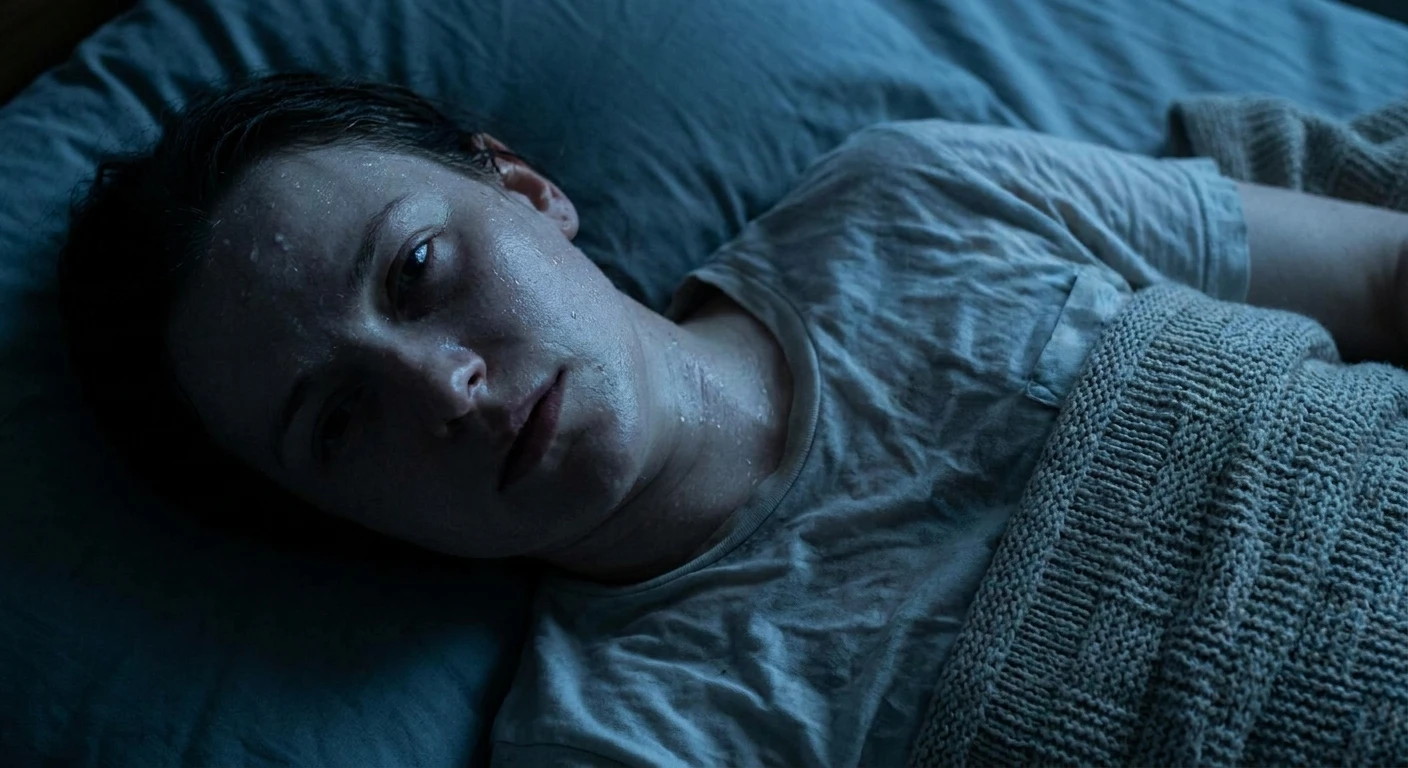
The Real Truth About Cold Sweats
Waking up in the middle of the night drenched and shivering because of cold sweats is an experience nobody asks for, yet so many of us go through it. You open your eyes, your heart is racing, your skin is clammy, and a massive wave of panic washes over you. You are not alone in this. Actually, this biological reaction is a powerful signal from your body trying to communicate that something is off balance. I remember a particularly harsh winter back in Kyiv. The city’s power grid was fluctuating, so the ambient temperature in my apartment dropped drastically. Despite the freezing air in my bedroom, I kept waking up in the middle of the night completely soaked in moisture, freezing, and confused. At first, I assumed I had caught a terrible seasonal flu. But after taking my temperature and tracking my symptoms, I realized it was entirely stress-induced from the constant sirens and work pressure. My sympathetic nervous system was simply working overtime.
Understanding exactly why your body triggers this response gives you the upper hand. Instead of panicking when you feel that sudden chill, you can read the symptoms like a dashboard indicator in a car. We need to dissect exactly how your physiology responds to stress, drops in blood sugar, or underlying infections, and map out exactly what you can do right now to reclaim your peaceful nights. Let’s get straight into fixing this issue.
Decoding the Core Mechanisms and Finding Relief
When you experience an episode, your body is essentially experiencing a glitch in its thermoregulation system. Medically referred to as diaphoresis, this condition happens when your sweat glands are activated not by heat or physical exertion, but by an internal stressor firing off your fight-or-flight response. Your heart pumps faster, blood is diverted to your major muscle groups, and your skin is left pale, clammy, and cold. The harm here is not just the discomfort; it completely shatters your sleep architecture. When your REM sleep is disrupted night after night, your cognitive function drops, your mood sours, and your overall immune system takes a massive hit. You wake up exhausted, dreading the next night.
But knowing the exact trigger provides an immense benefit. When you isolate the cause, you can deploy a specific fix. For instance, if you figure out that late-night anxiety is your trigger, a simple five-minute breathwork routine can lower your cortisol and save your sleep. Alternatively, if your blood sugar is crashing at 3 AM causing an adrenaline spike, a small protein-rich snack before bed completely eliminates the problem.
| Primary Trigger | Physical Symptom Presentation | Immediate Action Fix |
|---|---|---|
| Severe Acute Anxiety | Racing heartbeat, shallow breathing, damp skin | Box breathing technique (4 seconds in, hold, out) |
| Nocturnal Hypoglycemia | Dizziness, intense chills, mental confusion | Fast-acting carbohydrates (juice or glucose tablet) |
| Viral/Bacterial Infection | Fever breaking suddenly, muscle aches, shivering | Rehydration with electrolytes and immediate rest |
If you find yourself waking up soaked and shivering, do not just lie there soaking in discomfort. You need to reset your physical state immediately. Follow these exact steps:
- Get out of bed and strip off the damp clothes immediately to stop the rapid evaporation that is freezing your skin.
- Drink a full glass of room-temperature water to stabilize your core hydration without shocking your system with ice-cold fluids.
- Change into completely dry, loose-fitting cotton clothing and switch your damp bedsheets or grab a dry blanket.
- Perform a quick mental scan of your body to check for other symptoms like chest pain or fever, which might require a doctor’s visit.
Tracing the Roots: History and Medical Evolution
Origins of the Condition
Humans have been dealing with unexplained nocturnal sweating for millennia. Ancient physicians were completely baffled by it. In ancient Greece, medical practitioners strictly followed the humoral theory, believing that the human body was filled with four distinct fluids: blood, yellow bile, black bile, and phlegm. They incorrectly assumed that clammy skin was simply the body violently expelling an excess of one of these humors. If you went to a healer complaining of night terrors and damp skin, they might have prescribed bloodletting or drastic dietary fasting, which ironically probably made the stress and blood sugar crashes significantly worse. For centuries, this phenomenon was shrouded in superstition, often blamed on dark spirits or night terrors sent by angry deities.
Evolution of Medical Understanding
It was not until the late 19th and early 20th centuries that the medical community started looking at the nervous system rather than humors. Pioneers in physiology discovered the autonomic nervous system and realized that our bodies have an automatic override switch for emergencies. They figured out that adrenaline and noradrenaline were the main culprits driving the sweat glands to activate independently of environmental heat. During times of war, doctors documented thousands of soldiers suffering from intense night sweats, finally linking the physical symptoms definitively to psychological trauma and severe physiological stress. This was a massive leap forward. Instead of treating the sweat glands, doctors realized they needed to treat the brain and the adrenal system.
Modern State of Diagnosis
Now that we are firmly planted in the fast-paced medical landscape of 2026, our approach to diagnosing these physiological responses is incredibly precise. We no longer guess. Wearable technology, smart rings, and advanced biometric mattresses track our core body temperature, heart rate variability, and blood oxygen levels in real time while we sleep. If you wake up shivering, your smartwatch app can immediately tell you if your heart rate spiked before the sweat started, indicating a stress dream, or if your temperature dropped, pointing toward an immune response. We use endocrinology panels to map out exact cortisol spikes and insulin resistance markers, turning a terrifying mystery into a highly manageable data set.
The Scientific Breakdown of Diaphoresis
The Hypothalamus Connection
To truly beat this, you must understand your brain’s internal thermostat: the hypothalamus. Located deep within your brain, the hypothalamus constantly monitors your blood temperature and sends signals to either warm you up or cool you down. However, it can easily be tricked. When you get sick, inflammatory chemicals called pyrogens flood your bloodstream. Your hypothalamus reads these pyrogens and artificially raises your target body temperature, giving you a fever to burn off the virus. When the fever breaks, the hypothalamus suddenly resets the temperature target back to normal. To dump the excess heat rapidly, it triggers massive sweating. Because your body temperature is now dropping fast, the ambient air feels freezing, causing you to shiver violently. This is the classic physiological loop that ruins your night.
Sympathetic Nervous System Overdrive
Beyond infections, your sympathetic nervous system is the other major player. This is your survival network. When you experience a sudden drop in blood glucose (hypoglycemia), your brain panics because it needs sugar to survive. To force your liver to release stored glucose, your body dumps a massive load of adrenaline into your bloodstream. Adrenaline triggers your sweat glands directly. This is why you wake up with a pounding heart and clammy skin. You are literally experiencing a biological emergency response while lying perfectly still in bed.
- Eccrine Glands: These are the specific sweat glands distributed all over your body that react to adrenaline spikes, producing the watery sweat associated with sudden fright.
- Vasoconstriction: Adrenaline causes the blood vessels near your skin to constrict, making your skin feel freezing cold to the touch while you sweat.
- Cortisol Awakening Response: Chronic stress alters your natural hormone curves, causing inappropriate spikes of cortisol during deep sleep phases, which triggers sudden autonomic arousal.
- Endocrine Disruptors: Fluctuating hormone levels, particularly drops in estrogen or testosterone, severely confuse the hypothalamus, leading to sudden vasomotor flushes and chills.
The 7-Day Action Plan for Peaceful Nights
You need a systematic approach to shut down these episodes. Follow this strict seven-day protocol to isolate the trigger and stabilize your nervous system.
Day 1: Environmental Audit
Start by completely optimizing your bedroom. Set your thermostat between 60 and 67 degrees Fahrenheit (15-19 degrees Celsius). Throw away synthetic polyester sheets and switch strictly to breathable, natural fibers like cotton, linen, or bamboo. Make sure your sleepwear is equally breathable. You want to remove any external factors that could trap heat and confuse your body’s temperature sensors.
Day 2: Blood Sugar Tracking
Today, focus heavily on your glucose levels. Write down everything you eat, especially in the evening. If you usually eat heavy carbohydrates right before bed, you are likely triggering an insulin spike followed by a massive sugar crash at 3 AM. Shift your late-night snack to a complex protein and healthy fat combo—like a handful of almonds or a spoonful of peanut butter—to keep your blood sugar perfectly flat all night.
Day 3: Stress Hormone Reset
Cortisol management is your goal for day three. Cut off all caffeine intake by 2:00 PM. Caffeine has a massive half-life and keeps your sympathetic nervous system on edge long after you feel the buzz wear off. In the evening, replace doom-scrolling on your phone with ten minutes of progressive muscle relaxation or guided meditation to signal to your brain that the environment is safe.
Day 4: Hydration and Electrolytes
Sometimes, severe dehydration mimics anxiety in the body. If you sweat heavily, you lose massive amounts of sodium and potassium, which makes your heart work harder. Drink at least two to three liters of water today, and introduce a high-quality, sugar-free electrolyte supplement in the late afternoon. Proper hydration stabilizes your blood volume and keeps your heart rate resting peacefully.
Day 5: Dietary Adjustments
Spicy foods, heavy alcohol consumption, and excessive sodium can all trigger vasomotor symptoms. Today, strictly avoid hot peppers, heavy spices, and alcohol. Alcohol is a massive culprit; it relaxes you initially but severely disrupts your REM sleep and causes a rebound adrenaline spike as it metabolizes. Stick to clean, whole foods and herbal teas like chamomile or valerian root.
Day 6: Evening Wind-Down Routine
Consistency trains the brain. Establish a strict wind-down protocol. Exactly one hour before bed, dim all the overhead lights in your house. Take a warm (not hot) shower. The rapid cooling of your body after you step out of the shower naturally signals to your hypothalamus that it is time for deep sleep. Keep screens out of the bedroom entirely.
Day 7: Medical Review and Baseline Setting
By day seven, you should see a massive improvement. If you are still waking up drenched and shivering despite fixing your environment, diet, and stress levels, it is time to treat this as a medical baseline. Book an appointment with your physician. Ask specifically for a full thyroid panel, a fasting glucose test, and a basic infection screening to rule out underlying clinical issues.
Myths and Reality
There is a lot of bad advice floating around on the internet regarding this issue. Let’s clear up the nonsense.
Myth: You only get damp and chilly at night if you have a dangerous fever.
Reality: While fevers absolutely cause this, intense psychological stress, anxiety disorders, and minor blood sugar drops are vastly more common culprits for the average healthy adult.
Myth: You should pile on heavy blankets to sweat the sickness out.
Reality: This is incredibly dangerous. Overheating yourself intentionally will drastically increase your core temperature, confuse your hypothalamus further, and dehydrate you, making your symptoms much more severe.
Myth: Drinking a glass of whiskey before bed stops the chills.
Reality: Alcohol destroys your sleep architecture. It might put you to sleep faster, but it almost guarantees an adrenaline spike and severe temperature fluctuations in the middle of the night.
Myth: It is just a normal part of aging you have to live with.
Reality: While hormonal changes happen, chronic disruption of your sleep is never “normal.” It can almost always be managed with the right dietary, environmental, or medical interventions.
Frequently Asked Questions
Can intense daily stress directly cause this?
Absolutely, high daytime stress keeps your cortisol elevated, leading to nighttime adrenaline spikes.
Should I drink cold water when I wake up sweating?
No, stick to room-temperature water so you do not shock your already stressed system.
Are vivid nightmares connected to these physical symptoms?
Yes, night terrors activate your fight-or-flight response, instantly triggering sweat glands.
Does eating late at night make it worse?
It depends on the food; heavy carbs cause sugar crashes, while lean proteins stabilize you.
When should I actually go see a doctor?
If the episodes happen nightly for over two weeks or are accompanied by unexplained weight loss.
Can my bedroom temperature trigger false symptoms?
Yes, sleeping in a room above 70 degrees Fahrenheit with heavy blankets easily confuses your body.
Do hormonal changes in men cause this too?
Yes, sudden drops in testosterone can cause vasomotor symptoms very similar to menopause.
Will exercise right before bed help me sleep better?
Usually no, vigorous exercise spikes your core temperature and adrenaline, making sleep harder.
Can I use a fan if I feel freezing?
If you are shivering, dry off first, put on dry clothes, and avoid direct cold drafts until stabilized.
Conclusion
Dealing with cold sweats is incredibly frustrating, but you are now equipped with the exact knowledge to fight back. By understanding that this is a biological signal rather than a random curse, you can systematically address your environment, your stress levels, and your diet. Remember, your body wants to sleep peacefully just as much as you do. Stop suffering through terrible nights and start implementing the 7-day action plan immediately. Take control of your sleep environment tonight, and reclaim your rest!





Leave a Reply