

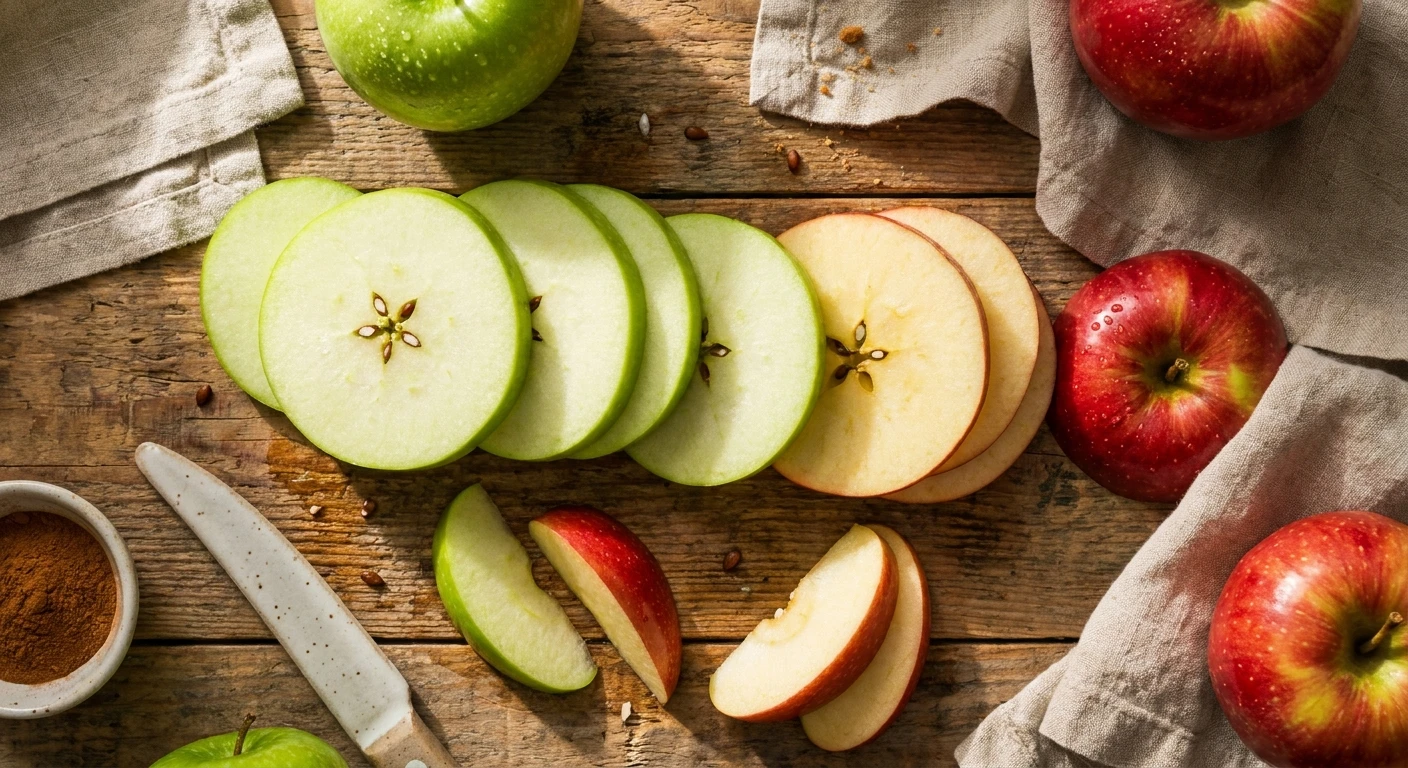
Are Apples Acidic? The Essential Facts You Need to Know
When you ask, are apples acidic, the straightforward answer requires a detailed look at their natural chemical makeup. Apples rank among the world’s most popular fruits, known for their crisp texture, convenience, and refreshing taste, but their unmistakable tartness is a direct result of naturally occurring organic acids. Understanding the exact pH level of the foods you consume daily makes a significant difference, especially for preserving your dental enamel and maintaining a calm, well-functioning digestive system. Whether you prefer the sharp, mouth-puckering bite of a bright green Granny Smith or the mild, honey-like sweetness of a Fuji, the acidity levels vary dramatically between different orchards and varieties. We will explore the precise scientific measurements that determine their tartness and how these natural chemical compounds interact with the human body on a microscopic level. From exact malic acid concentrations to the fascinating ways your internal organs process these nutrients, grasping the science behind your afternoon snack gives you total control over your dietary choices. Let us break down exactly what makes an apple tart, how these natural fruit acids behave in the human stomach, and the optimal, science-backed ways to enjoy them every single day without triggering heartburn, enamel erosion, or digestive discomfort.
The Impact of Apple Acidity on Your Body and Diet
Eating fresh, whole fruit brings immense nutritional benefits, including essential dietary fiber, vitamins, and hydration, but managing their natural acids ensures you avoid potential long-term side effects. Apples contain predominantly malic acid, a compound which gives them their signature crisp, refreshing flavor profile. While this naturally occurring acid is generally harmless and even beneficial in moderation, consuming highly acidic varieties frequently without proper dental hygiene protocols might soften tooth enamel over an extended period. Conversely, the human body metabolizes these natural acids incredibly efficiently, often having a surprisingly alkalizing effect on your system once fully digested and absorbed into the bloodstream.
Read also: Best Keto Fruit Options for Low-Carb Diets; Apple Cider Vinegar and Honey: Real Health Benefits.
To manage your daily fruit intake smartly, you must consider the specific pH levels of popular grocery store varieties. A pH scale measures how acidic or basic a substance is, ranging from 0 to 14, with lower numbers indicating higher acidity. Here is a comprehensive breakdown of how different popular apples compare on the scientific pH scale:
| Apple Variety | Approximate pH Level | Acidity Profile & Primary Culinary Use |
|---|---|---|
| Granny Smith | 3.2 – 3.4 | Highly acidic, very tart. Best for baking and sharp snacking. |
| Braeburn | 3.3 – 3.5 | Moderately high acidity. Excellent for cider making and pies. |
| Honeycrisp | 3.8 – 4.0 | Balanced acidity. Perfect for raw eating and salads. |
| Gala | 3.9 – 4.2 | Low acidity, mild flavor. Great for children and sensitive stomachs. |
| Fuji | 4.1 – 4.5 | Very low acidity, incredibly sweet. Ideal for snacking with no tartness. |
Selecting the right apple directly depends on your personal stomach sensitivity, enamel thickness, and general flavor preference. If you frequently experience acid reflux or GERD symptoms, opting for sweeter, less acidic varieties provides all the nutritional benefits, like pectin and potassium, without the uncomfortable burning sensation in your chest. Here are the primary ways you can actively manage fruit acidity in your daily routine:
- Pair your freshly cut apple slices with a neutral or highly alkaline food, such as a generous handful of raw almonds, walnuts, or a thick slice of mild cheddar cheese, to physically buffer the malic acid in your mouth and stomach.
- Rinse your mouth thoroughly with plain, unflavored water immediately after eating an apple to quickly wash away residual fructose sugars and organic acids from your delicate teeth.
- Bake, stew, or cook the apples thoroughly, as the sustained heating process slightly alters the structural chemical matrix of the plant fibers, often making them substantially easier on a highly sensitive digestive tract.
- Limit your consumption of highly tart green apples to meal times rather than eating them alone as an isolated snack, allowing the presence of other foods to dilute the total acid concentration in your stomach.
By understanding the inherent chemical properties of your fresh produce, you make vastly smarter choices for both your long-term oral health and your overall gastrointestinal digestion.
The Ancient Origins of Apple Cultivation
The domestic apple, known scientifically as Malus domestica, traces its deep genetic roots back thousands of years to the rugged, wild mountain ranges of Central Asia, specifically in the region of modern-day Kazakhstan. Early, wild ancestors of the modern fruit were significantly more acidic, astringent, and bitter than the remarkably sweet varieties we effortlessly find in modern supermarkets today. These ancient wild apples practically relied on their sharp, highly acidic nature to deter certain insect pests while simultaneously attracting larger mammals, such as ancient bears and wild horses, that would consume the fruit and spread their seeds across vast geographical distances.
Evolution of Sweetness and Controlled Acidity
As human civilization and agricultural cultivation expanded rapidly along the historic Silk Road, ancient farmers began selectively breeding apple trees to balance their harsh natural acidity with a much higher sugar content. The ancient Romans eventually brought highly advanced agricultural grafting techniques to Western Europe, allowing skilled orchardists to consistently and reliably reproduce specific apples that featured a desirable crunch and a much milder pH level. During these middle centuries, the intense tartness of the fruit actually remained highly valued by society, especially for the massive production of hard cider. In the cider fermentation process, high natural acidity acts as an essential, natural preservative that prevents bacterial spoilage and serves as a vital flavor enhancer.
The Modern State of Botanical Apple Breeding
Today, professional horticulturalists and university agricultural departments meticulously breed apples to achieve incredibly specific acid-to-sugar ratios. Modern commercial varieties spend decades in research and development phases, tested rigorously for their precise malic acid concentrations before ever reaching the public market. Botanical breeders know that modern consumer preference overwhelmingly leans toward the sweeter, juicier side, which is precisely why newer supermarket staples exhibit significantly lower acidity compared to old-world heirloom cider apples. The advanced agricultural science behind modern apple farming ensures that whether you want a sharp, firm pie apple that holds its shape or a soft, sweet snacking fruit for your lunchbox, the precise pH profile is cultivated deliberately to perfectly match global market demands.
The Microscopic Chemistry of Malic Acid
The absolute primary driver of tartness in an apple is malic acid, a specific dicarboxylic acid that occurs naturally in a wide variety of plants and fruits. When you bite into an apple, the sudden release of malic acid instantly triggers the sensitive sour-detecting taste receptors located on your tongue. In the context of the universal pH scale, which strictly ranges from 0 (highly acidic, like battery acid) to 14 (highly alkaline, like liquid bleach), with exactly 7 being perfectly neutral pure water, apples generally fall between 3.2 and 4.5. This chemical measurement officially classifies them as mildly to moderately acidic. Unlike the sharp, aggressive citric acid dominant in lemons, limes, and oranges, malic acid provides a much smoother, rounder, and more lingering tartness that blends seamlessly with the fruit’s natural fructose sugars.
How the Human Body Metabolizes Fruit Acids
Despite their clearly acidic nature while sitting on your kitchen counter, apples do not necessarily acidify your internal biological system. Human digestion is an incredibly complex, multi-stage metabolic process. Once the malic acid passes safely through the already highly acidic environment of your stomach (which naturally rests at a highly corrosive pH of around 1.5 to 3.5 to break down proteins), it is quickly absorbed and metabolized during the cellular Krebs cycle. This vital metabolic pathway generates necessary cellular energy and actually leaves behind predominantly alkaline byproducts.
Here are the core scientific facts regarding complex apple chemistry and human digestion:
- Malic acid acts as a powerful natural chelating agent, meaning it can chemically bind to essential minerals like magnesium and calcium to help your digestive system absorb them much more effectively.
- The physical pH of an apple remains relatively stable regardless of exactly how long it is stored in a cellar, though the perceived tartness on your tongue decreases dramatically as the internal starches slowly convert to pure sugar during the ripening process.
- While the raw fruit is physically and chemically acidic, the resulting metabolic ash produced post-digestion inside your cells is entirely alkaline, which actively helps maintain your blood’s strict pH balance.
- Ascorbic acid, commonly known as Vitamin C, is also abundantly present in the flesh and skin, contributing marginally to the overall acidic measurement but providing absolutely essential antioxidant and immune-system support.
- The fibrous skin of the fruit contains high amounts of pectin, a soluble fiber that physically coats the stomach lining, potentially buffering the immediate effects of the fruit’s own acids during the initial stages of digestion.
A 7-Day Actionable Guide to Enjoying Apples with Zero Discomfort
If you happen to have a highly sensitive stomach, struggle with occasional heartburn, or worry about long-term dental enamel erosion, you can absolutely still enjoy this fantastic, nutrient-dense fruit. Follow this comprehensive, carefully structured daily plan to seamlessly integrate apples into your diet safely and deliciously.
Day 1: Start Simple with Low-Acid Varieties
Begin your week by heading to the market and purposefully purchasing Fuji, Gala, or Red Delicious apples. These specific varieties naturally possess the lowest malic acid content available commercially, sitting comfortably above a 4.0 on the standard pH scale. This makes them incredibly gentle on your delicate digestive tract and an entirely safe starting point for sensitive stomachs.
Day 2: The Dairy Pairing Strategy
Slice your chosen apple into thin wedges and eat it alongside a generous piece of sharp cheddar or Gouda cheese. The natural dietary calcium, rich proteins, and healthy fats found in the cheese immediately neutralize the loose fruit acids currently in your mouth. This brilliant culinary pairing effectively protects your dental enamel while providing an absolutely delicious, classic flavor contrast.
Day 3: Master the Water Rinse Habit
Eat your favorite crisp apple as a refreshing mid-morning snack at your desk, but immediately follow it with a tall, cold glass of plain drinking water. Vigorously swishing the water around your mouth for ten seconds washes away any residual sticky malic acid and lingering sugars before they ever have the chance to sit and soften your protective teeth layers.
Day 4: Baking for Enhanced Digestion
Core a large apple, sprinkle it lightly with aromatic cinnamon and nutmeg, and bake it in the oven until tender. The intense application of sustained thermal heat successfully breaks down some of the complex, rigid fibrous plant structures and completely alters the chemical impact of the fruit. This makes the cooked flesh substantially easier for a highly sensitive or sluggish gastrointestinal tract to process smoothly.
Day 5: Blend into Highly Alkaline Smoothies
Add half of a chopped apple (skin included for extra pectin) to a nutrient-packed green smoothie containing fresh spinach, hydrating cucumber, and smooth almond milk. The highly alkaline nature of the dark leafy greens completely buffers and neutralizes the fruit’s natural acidity, giving you all the potent vitamins and robust flavors without the sharp, acidic bite.
Day 6: Perfecting Your Intake Timing
Make a conscious effort to avoid eating raw apples on an entirely empty stomach if you are biologically prone to severe acid reflux or morning heartburn. Instead, deliberately consume them as a healthy, sweet dessert after eating a large, well-balanced lunch. This allows the previously eaten proteins and complex carbohydrates to cushion the immediate digestive process.
Day 7: Experiment with Dehydrated Apple Chips
Finish the week strong with homemade, slowly baked apple chips. Removing the natural water content significantly concentrates the sweet fructose sugars. While the natural malic acid technically remains within the dried flesh, actively chewing the chewy chips alongside a handful of highly alkaline, fat-rich walnuts makes for a perfectly chemically balanced, acid-neutralizing afternoon snack.
Busted: Common Myths About Fruit Acidity
When discussing fruit chemistry and human digestion, baseless misinformation spreads quickly across the internet. It is time to clear up some widespread, persistent misunderstandings with cold, hard science.
Myth: Apples are dangerously highly acidic and will permanently damage your stomach lining if eaten daily.
Reality: Your natural human stomach acid is significantly stronger and substantially more corrosive than the mild malic acid found in literally any fruit. Unless you suffer from a severe, pre-existing medical condition like a bleeding gastric ulcer, the gentle, mild tartness of a standard apple will absolutely not damage, erode, or harm your healthy gastric lining.
Myth: Vigorously brushing your teeth immediately after eating an apple perfectly protects your enamel from decay.
Reality: Brushing with an abrasive toothbrush immediately after eating any acidic foods actually rapidly accelerates enamel wear and tear because the fruit acid temporarily softens the microscopic tooth surface. It is scientifically much safer to simply rinse with water and patiently wait at least thirty full minutes before brushing.
Myth: Ultra-sweet apples contain zero acid whatsoever.
Reality: Absolutely all apples, regardless of color or origin, contain baseline levels of malic acid. The ultra-sweet varieties simply contain a dramatically higher ratio of natural sugar to acid, which successfully masks the sharp, tart flavor on your sensory palate.
Myth: You should peel apples to remove the acid.
Reality: The vast majority of the fruit’s natural organic acids are uniformly distributed throughout the juicy flesh, not isolated in the skin. Peeling the fruit merely removes highly beneficial dietary fiber and vital antioxidants, leaving the total acidity virtually unchanged.
Can apples cause severe acid reflux?
Yes, highly tart, sharp varieties like the classic Granny Smith can easily trigger reflux or heartburn in biologically sensitive individuals. Switching your daily intake to much sweeter, milder types usually resolves this frustrating issue completely.
Are bright green apples more acidic than dark red ones?
Generally speaking, yes. Green varieties are intentionally bred for their sharp, incredibly crisp bite, meaning they naturally contain measurably higher concentrations of active malic acid than the vast majority of mild red varieties.
Does boiling or cooking an apple literally reduce its internal acidity?
The physical act of cooking does not magically remove or destroy the acid molecules, but the intense heat significantly softens the tough plant fibers and heavily alters the overall chemical matrix, making it much easier and less irritating to digest.
Is fermented apple cider vinegar more acidic than a fresh, raw apple?
Yes, by a significant margin. The bacterial fermentation process literally creates concentrated acetic acid, which is substantially more potent, aggressive, and highly acidic than the gentle natural malic acid found in the raw, unfermented fruit.
How do I best protect my teeth from residual apple acid?
Always proactively rinse your mouth with plain water after eating, purposefully consume the fruit alongside fat-rich cheese or nuts to neutralize the environment, and always wait at least thirty minutes before vigorously brushing your teeth.
Which specific apple variety is the absolute least acidic?
The Fuji and Gala varieties are widely, scientifically considered to have the lowest total acid content of all commercial grocery apples, making them the sweetest and most reliably gentle options available for daily consumption.
Is the natural acid in apples actually bad for your overall health?
No, organic malic acid is perfectly safe for healthy individuals and practically assists your body in microscopic energy production and essential mineral absorption during the complex process of digestion.
Do organic apples have a different pH level than conventionally grown ones?
No, the farming method (organic versus conventional) does not significantly alter the fundamental genetic pH level of the specific variety. A Granny Smith will be equally acidic regardless of the pesticides used.
Can drinking apple juice cause more acidity issues than eating the whole fruit?
Yes. Commercial apple juice lacks the buffering dietary fiber (pectin) found in the whole fruit, meaning the concentrated sugars and liquid acids hit your stomach and teeth much faster and harder.
Does the acidity of an apple change as it sits and ripens?
The literal scientific pH measurement barely changes, but as the fruit ripens, its complex internal starches rapidly convert to pure sugars. This massive increase in sugar heavily masks the tartness, making the apple taste significantly less acidic over time.
Final Thoughts and Guidelines on Apple Acidity
Understanding the detailed chemical profile of your daily food profoundly empowers you to make vastly smarter, healthier dietary choices. You now know exactly how these incredibly popular fruits interact with your delicate digestion, complex cellular metabolism, and vital dental health. Whether you actively crave a sharp, refreshing green bite to wake you up or a mild, comforting red snack before bed, managing your daily fruit intake is incredibly simple once you know the science. Try implementing the comprehensive seven-day action plan detailed above, and confidently share this expert nutritional guide with anyone looking to optimize their daily diet and conquer their fear of fruit acidity!





Leave a Reply