

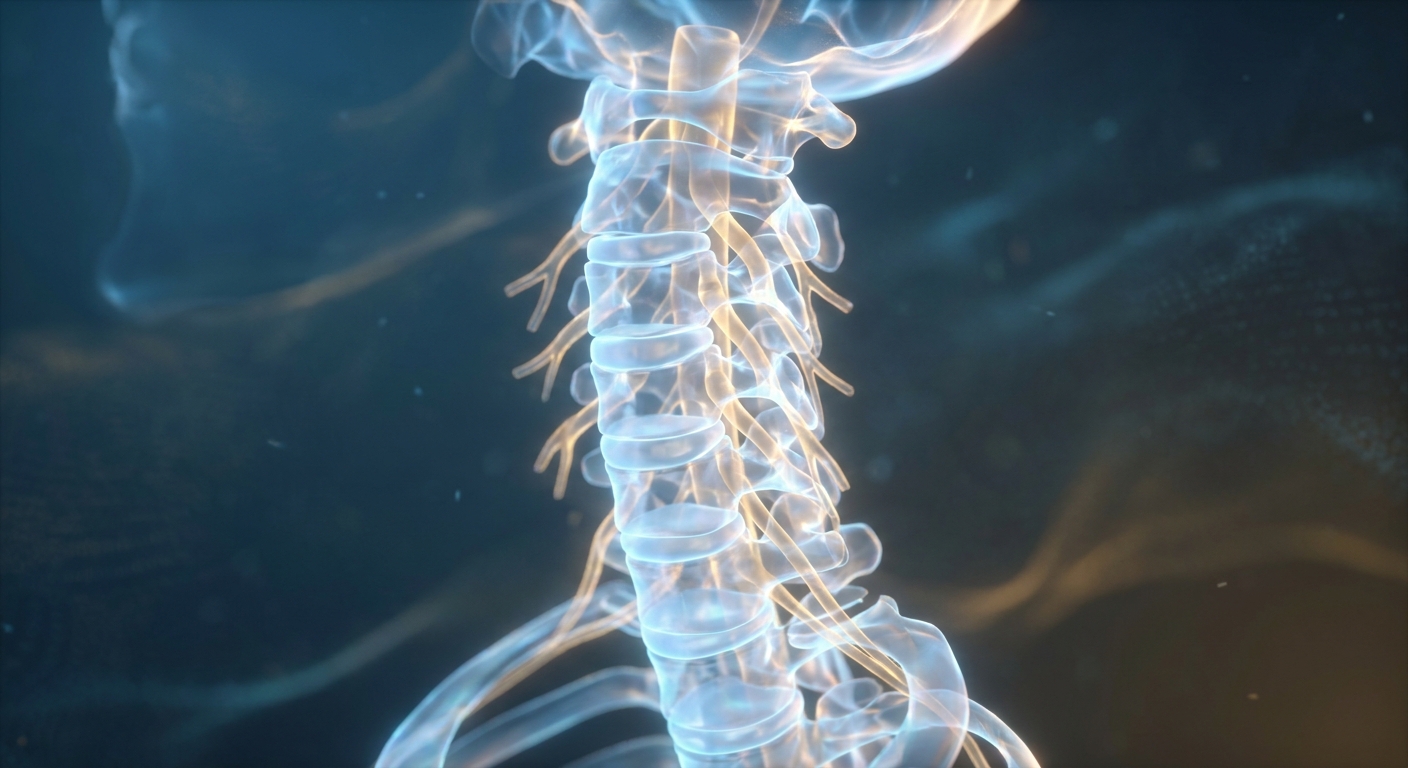
Understanding Uncovertebral Hypertrophy
Dealing with chronic neck stiffness might actually point straight to a structural condition known as uncovertebral hypertrophy. If you wake up every single morning feeling like your cervical spine is locked in a vice, you are definitely not alone. Let me share a quick story. My good friend Oksana, who lives right here in Kyiv, spent almost eight months aggressively rubbing heat ointments on her neck. She blamed cold drafts, bad pillows, and even her mattress. She was entirely convinced she just had bad luck with lingering muscle spasms. Turns out, the issue was structural and happening deep inside her spine.
Once she finally got the correct diagnosis, her whole approach had to shift. The truth is simple: bone overgrowth in the neck sounds terrifying when a physician first reads your MRI, but it is completely manageable once you grasp the mechanical forces at play. We are living in 2026, and the sheer volume of screen time we consume has made spinal health a daily conversation, not just something older generations worry about. We are going to walk through exactly what is happening to those tiny joints in your neck, how to stop the progression, and the most effective ways to regain your mobility without panicking.
Understanding exactly what you are up against gives you two massive advantages: you stop wasting hard-earned cash on useless neck massagers, and you actively prevent irreversible nerve damage. Think about my neighbor Igor, who ignored his diagnosis, kept hunching over his laptop, and eventually needed an invasive surgical fusion. On the flip side, my cousin Yulia caught her condition early, adjusted her posture, committed to targeted physical therapy, and is completely pain-free today. Action dictates outcome.
| Progression Stage | Typical Symptoms | Recommended Action |
|---|---|---|
| Early Stage | Mild morning stiffness, localized dull ache | Ergonomic corrections, daily stretching |
| Moderate Stage | Radiating pain, tingling in the fingers | Physical therapy, anti-inflammatory medication |
| Advanced Stage | Severe weakness, chronic pain, nerve block | Injections, surgical consultation |
To really get a grip on this situation, you need a solid game plan. Here are three steps you must take right now:
- Listen closely to the morning stiffness, as it is the earliest warning sign your joints are inflamed.
- Watch actively for any finger tingling or numbness, which indicates nerve compression.
- Demand a proper MRI from your doctor instead of settling for a basic X-ray.
Origins of the Condition
So, how did humans even end up with these vulnerable joints in the first place? It really comes down to the evolutionary quirk of walking fully upright. Bipedalism allowed us to free our hands and build civilizations, but it put an immense, constant load directly on the cervical spine. The human head weighs about ten to twelve pounds, and balancing that weight on a narrow column of bones requires massive stabilization. Over thousands of years, our bodies adapted, but the mechanical stress never went away. The joints in the neck constantly fight against gravity.
Evolution of Medical Understanding
Back in 1858, a brilliant German anatomist named Hubert von Luschka first described the tiny structures that would eventually be known as the joints of Luschka, or uncovertebral joints. For decades after his discovery, doctors dismissed pain in this area as simply “getting old.” It was lumped into the broad category of general arthritis. Patients were told to rest and accept their declining mobility. The medical community lacked the imaging technology to see exactly how these small bony projections, called uncinate processes, were rubbing together, grinding away cartilage, and forming painful bone spurs over time.
Modern State of Treatment
Fast forward to the medical landscape of 2026. We no longer treat cervical spine issues as an inevitable consequence of aging. High-resolution MRI scanners allow orthopedic specialists to spot the exact millimeter where bone overgrowth is threatening a nerve root. We understand that tech neck and poor ergonomics are dramatically accelerating this condition in younger populations. Treatment has shifted away from simply masking the pain with heavy narcotics. Instead, we use a highly targeted mix of biomechanical physical therapy, precise corticosteroid injections, and advanced minimally invasive procedures to restore function.
The Biomechanics of Bone Spurs
Let me break down the science in plain English. Your cervical spine has tiny upward-pointing lips of bone on the sides of the vertebrae called uncinate processes. When the soft discs sitting between your vertebrae lose moisture and flatten out—usually due to age or chronic bad posture—these uncinate processes get pushed closer together. The body senses this abnormal friction and instability. Following a biological rule known as Wolff’s Law, your body responds to the mechanical stress by laying down extra bone to stabilize the wobbly area. This extra bone is the hypertrophy. The problem is, this defensive mechanism creates jagged bone spurs called osteophytes that take up space meant for moving tissue.
Neurological Impact Explained
The real trouble starts when these new bone spurs grow outward into the narrow tunnels where your spinal nerves exit the spinal cord. This specific space is called the intervertebral foramen. When the bony overgrowth narrows these tunnels, it is known as foraminal stenosis. The bones literally pinch the fragile nerves traveling down to your shoulders, arms, and hands. This compression triggers a condition called cervical radiculopathy, which is why a problem originating in your neck makes your fingertips feel numb.
- Uncovertebral joints are actually pseudo-joints that do not fully develop until around age 10.
- Osteophytes are the body’s flawed, desperate attempt to naturally fuse an unstable spine.
- Foraminal stenosis occurs when these bony ridges aggressively invade the nerve exit tunnels.
- Cartilage degradation in this area triggers localized inflammation, which biochemically accelerates further bone growth.
Day 1: Acute Inflammation Reduction
The first 24 hours are all about putting out the fire. Stop doing whatever aggrevates your neck. Apply a wrapped ice pack to the base of your skull for 15 minutes every two hours. Take over-the-counter anti-inflammatories if your doctor allows it. The goal today is simply to calm the hyperactive pain receptors and reduce the swelling around the pinched nerves.
Day 2: Ergonomic Reset
You cannot heal in the exact same environment that made you sick. Today, audit your workspace. Raise your computer monitor so the top third of the screen is at eye level. Throw out that flat, worn-out pillow and invest in a supportive cervical contour pillow. Keep your phone at face level when texting.
Day 3: Gentle Cervical Traction
Once the sharpest pain dulls, introduce light traction to decompress the spine. Lie flat on your back on a firm surface, place a rolled-up towel securely under the curve of your neck, and just breathe for ten minutes. Let the weight of your head gently stretch the cervical muscles, opening up those narrowed nerve tunnels.
Day 4: Isometric Strengthening
Now we build stability without dangerous movement. Place your palm flat against your forehead. Gently push your head into your hand while using your hand to resist the motion, so your neck does not actually move. Hold for five seconds. Repeat on the back and sides of the head. This wakes up the deep neck stabilizers.
Day 5: Heat and Blood Flow
Switch from ice to heat. Apply a warm, damp towel around your neck to encourage massive blood flow to the damaged tissues. Blood brings oxygen and essential healing nutrients. Follow the heat session with a brisk 20-minute walk, swinging your arms naturally to loosen the upper back.
Day 6: Postural Awareness
Today is about building the habit of chin tucks. Every hour, pull your chin straight back as if you are trying to make a double chin. This motion reverses the dreaded forward-head posture that crushes the uncovertebral joints. Do ten reps every single hour you are awake.
Day 7: Long-Term Maintenance Planning
You have stabilized the flare-up, but the underlying bone spurs are still there. Day 7 is for scheduling a formal evaluation with a physical therapist. Write out a daily routine combining the chin tucks, isometric holds, and strict ergonomic rules to keep the symptoms permanently at bay.
Myth: Cracking your neck forcefully clears away the bone spurs.
Reality: Cracking provides a temporary, satisfying release of joint gas, but it actually accelerates joint instability. The aggressive movement forces your body to grow even more bone to stabilize the traumatized area, making the hypertrophy much worse over time.
Myth: A diagnosis means you are going to need immediate spinal surgery.
Reality: Well over 90 percent of these cases are successfully managed conservatively with targeted physical therapy, postural habits, and occasional medication. Surgery is strictly the absolute last resort for patients suffering from severe, unrelenting neurological deficits.
Myth: This condition only happens to the elderly.
Reality: Thanks to our modern obsession with smartphones and laptops, orthopedic clinics are currently seeing a massive wave of patients in their late 20s and 30s presenting with significant cervical bone overgrowth.
Can the bone overgrowth be reversed?
No, the actual bone spurs will not shrink naturally. However, the inflammation and the painful symptoms can absolutely be eliminated through proper conservative treatment.
Is walking good for this condition?
Yes, brisk walking is excellent. It promotes rhythmic spinal fluid movement, gently stretches tight muscles, and helps hydrate the spinal discs without excessive impact.
What is the absolute best sleeping position?
Sleeping flat on your back with a dedicated cervical contour pillow is best. It maintains the natural curve of the neck and keeps the nerve tunnels open.
Does heat or ice work better?
Use ice during an acute, sharp flare-up to numb the area and reduce swelling. Switch to heat for chronic, dull muscle stiffness to promote blood flow.
Can professional massage therapy help?
Yes, massage is fantastic for relieving the secondary muscle spasms that inevitably occur when your neck tries to guard the irritated joints.
Is heavy weightlifting still safe?
It can be, but only with absolutely perfect form. You must avoid heavy overhead presses or any exercise that puts direct downward pressure on the spine.
Will this condition cause paralysis?
It is incredibly rare. The vast majority of cases only cause localized pain, tingling, or temporary muscle weakness in the arms, not catastrophic spinal cord injuries.
Taking control of your spinal health doesn’t have to be an overwhelming nightmare. By understanding exactly how your cervical joints function and applying consistent, smart daily habits, you can stop the progression of symptoms dead in their tracks. Stop letting neck pain dictate your mood and schedule. Grab your phone right now, look up a highly-rated local physical therapist, and book an initial consultation to get your life fully back on track.





Leave a Reply