

What is the rarest eye color
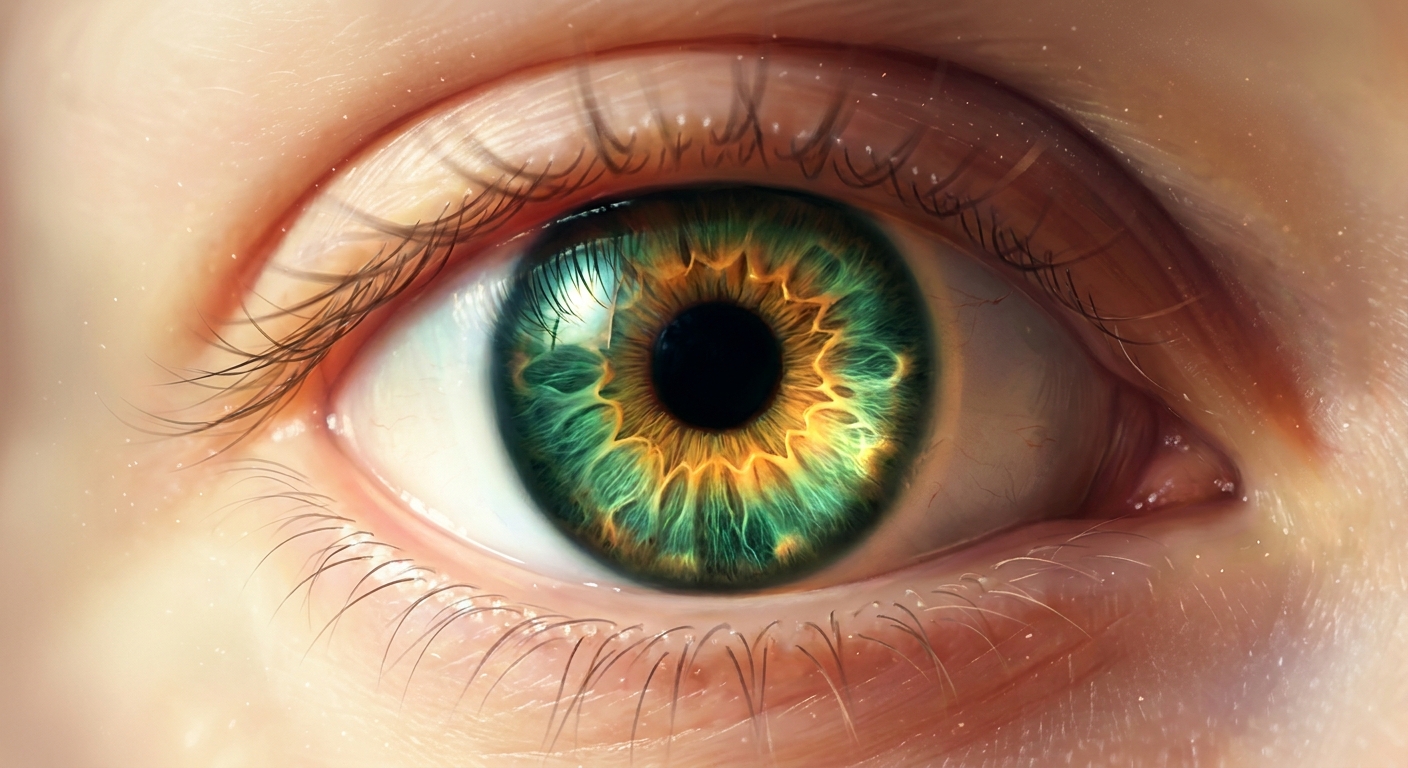
Ever locked eyes with someone across a room and immediately found yourself wondering, what is the rarest eye color on the planet? You are definitely not alone. I was sitting with a friend at a local coffee shop right here in Kyiv just the other day, and the afternoon sunlight hit her face perfectly. Her eyes flashed this incredible, almost glowing shade of amber-green. It honestly looked like something out of a cinematic movie. I leaned across the table and literally asked her if she was wearing colored contacts. She laughed and said no, it was just pure genetics. That simple moment got me thinking about how incredibly diverse and fascinating human traits really are.
We are going to break down the absolute most unique and uncommon optical shades out there, the biological mechanics that actually create them, and why some individuals are basically walking around as living genetic lottery winners. Listen, genetics are absolutely wild. Most of us grow up thinking there are just three basic options: brown, blue, and green. But the reality is so much more complex and stunning. Whether you are rocking standard dark brown peepers or something totally unusual, understanding the sheer science behind our physical features completely shifts how you see the people around you.
The Reality of Rare Ocular Pigmentation
So, let us get straight to the facts. When people ask about the absolute rarest shades, they usually guess green. While green is genuinely uncommon, making up roughly 2% of the global population, it is actually not the most exceptionally rare. Pure gray eyes clock in at less than 1%. And if we look at extreme genetic anomalies, red or violet shades caused by severe albinism are phenomenally scarce, affecting a fraction of a percent of humans. There is also heterochromia, where a person has two entirely different colored irises, which is just stunning to witness.
Understanding these biological variations gives you a totally new appreciation for human diversity. For example, knowing your genetic history helps you predict what traits you might pass down to your kids. Plus, tracking iris patterns can sometimes act as a fascinating window into your ancient ancestral migration paths.
| Eye Color | Global Population Percentage | Key Genetic Factor |
|---|---|---|
| Green | ~2% | Low melanin combined with lipochrome pigment. |
| Gray | < 1% | Virtually no melanin, extra collagen in the stroma. |
| Red/Violet (Albinism) | < 0.1% | Complete absence of pigment; blood vessels show through. |
| Heterochromia | < 1% | Uneven melanin distribution across one or both irises. |
Here are the primary biological drivers that dictate why ocular shades vary so intensely across different populations:
- Melanin Production Levels: The exact amount of pigment your body naturally produces dictates how dark your iris gets. Lots of melanin means deep brown; minimal melanin leads to light blue or gray.
- Structural Light Scattering: This is purely physics. How light hits the physical fibers of your iris and bounces back completely changes the perceived hue.
- Ancestral Gene Mutations: Specific genetic shifts passed down through thousands of generations lock in specific regional traits.
Origins of Genetic Mutations
To really grasp how these unique hues came to be, we have to look back at ancient history. Originally, every single human ancestor walking the earth had dark brown eyes. That was the standard factory setting for human beings, primarily because high melanin levels offered excellent protection against harsh, intense sunlight in warmer climates. The rich, dark pigment shielded the retina from ultraviolet radiation damage perfectly.
Evolution Across Centuries
Things shifted dramatically thousands of years ago. Scientists believe a very specific genetic mutation occurred roughly 6,000 to 10,000 years ago, somewhere around the Black Sea region. This single mutation affected the OCA2 gene, essentially acting like a biological dimmer switch. It did not completely turn off melanin production, but it drastically reduced it in the iris. Suddenly, blue and lighter shades began appearing. As human populations migrated to colder, cloudier northern climates where severe sun protection was less vital, these lighter traits easily survived and flourished.
The Modern State of Eye Colors
Fast forward to the year 2026, and our globalized society means traits are mixing more beautifully than ever before. You can find rare amber or green shades in populations where they were virtually non-existent centuries ago. However, the sheer math of dominant versus recessive genes means dark brown will always remain the overwhelming global majority. Even as global demographics shift and blend right now, those rare gray, true green, and dazzling violet-hued anomalies remain exceptional genetic treasures that immediately catch your attention.
Melanin and Stroma Light Scattering
Let us talk about the actual mechanics happening inside your eyeball, because the biology here is basically magic. The colored part of your eye is called the iris, and it has two layers: the front layer known as the stroma, and the back layer known as the epithelium. The epithelium usually contains black-brown pigment in almost everyone. The real magic happens in the stroma. When people have incredibly rare gray or blue eyes, their stroma contains zero pigment. So, where does the color come from? It is purely structural.
The Rayleigh Scattering Effect
You know why the sky looks blue during the day? It is a physics principle called Rayleigh scattering, where light waves hit atmospheric particles and the blue wavelengths scatter the most. That exact same physics trick is happening in the stroma. When light hits a pigment-free stroma, the longer wavelengths (like red) pass through and get absorbed by the back layer, while the shorter blue wavelengths bounce right back out at the person looking at you. It is literally an optical illusion!
- The OCA2 Gene: This is the main genetic boss controlling how much melanin gets deposited into the iris.
- The HERC2 Gene: This gene acts as the switchboard operator, specifically telling the OCA2 gene to either turn on or off.
- Lipochrome: A yellowish pigment that, when mixed with the blue light scattering effect, creates breathtaking green and amber shades.
- Eumelanin vs. Pheomelanin: Eumelanin creates black and brown tones, while pheomelanin creates red and yellow tones within the body.
Day 1: Natural Light Assessment
If you want to perfectly categorize your own ocular shade, start by looking at your face in pure, unadulterated morning sunlight. Artificial indoor bulbs cast harsh yellow or blue tints that completely distort the true color. Step outside or stand directly next to a large window around 9:00 AM, hold up a mirror, and look closely. You might suddenly notice gold rings or blue flecks you never knew existed.
Day 2: The Flashlight Test
Take your smartphone flashlight and shine it directly at your eye from a safe, sideways angle in a dark room. This intense light forces your pupil to shrink, exposing the maximum amount of your iris. This is the absolute best way to spot central heterochromia, which is a rare ring of a completely different color right around the center pupil.
Day 3: Wardrobe Color Matching
Physics dictates that the colors you wear influence how people perceive your face. Spend this day wearing a shirt that matches what you think your eye color is. If you suspect you have rare green eyes, wear a rich emerald top. The clothing will naturally pull out and emphasize those matching subtle pigments in your stroma.
Day 4: Genetic Mapping Activity
Call up your parents or grandparents. Ask them about the exact physical traits of extended family members. Mapping out a basic family tree of traits is a really fun way to trace exactly how your specific shade managed to survive the genetic lottery. You might find out your great-grandmother had the exact same rare gray eyes you do.
Day 5: The Stroma Deep-Dive
Grab a camera with a good macro lens, or just use the macro setting on your smartphone camera. Take an extreme, highly focused close-up photo of your iris. When you zoom in on that image, you will see the physical structure of your stroma—it genuinely looks like craters, threads, and lunar landscapes. It is completely totally unique to you, exactly like a fingerprint.
Day 6: Diet and Eye Health
While food will absolutely not permanently alter your genetics, staying incredibly hydrated and maintaining a diet rich in raw antioxidants keeps the whites of your eyes (the sclera) bright and clear. A brighter sclera creates a sharper, more vivid contrast, making your natural pigment pop aggressively.
Day 7: Photographic Documentation
Document your findings! Take a series of photos in the golden hour light, compile them, and compare them against official genetic charts online. By day seven, you will have an incredible appreciation for your own biological design and a solid understanding of exactly where you stand on the global rarity scale.
Myth: Babies’ eyes never change color
Reality: This is completely false. A huge percentage of babies of European descent are born with brilliant blue eyes simply because their melanin production has not fully kicked in yet. As they are exposed to light, their bodies begin actively producing pigment, and those bright blue eyes can easily transition to thick green, hazel, or deep brown anywhere up to their third birthday.
Myth: True black eyes actually exist
Reality: No matter how dark someone’s eyes appear, true pure black irises simply do not exist in human biology. What you are actually seeing is just an exceptionally deep, heavily pigmented shade of dark brown that absorbs almost all light. If you hit them with a bright enough light, you will see the brown.
Myth: You can permanently change your eye color with honey drops
Reality: Please completely ignore this dangerous internet rumor. Putting raw honey into your eyeball will absolutely not alter your genetics or lighten your pigment. It will only put you at severe risk for extreme bacterial infections and potential blindness.
Are purple eyes biologically real?
Yes, but purely as a result of severe albinism. When someone lacks pigment entirely, light bounces directly off the red blood vessels in the back of the eye. When that red mixes with the natural blue scattering of the stroma, it creates a purple or violet illusion.
Is pure amber actually rarer than green?
It is heavily debated among geneticists, but pure amber (a solid, glowing copper or gold color without any brown or green flakes) is incredibly rare, often rivaling or beating green in strict scarcity.
Can severe physical trauma change your eye color?
Yes. Blunt force trauma or serious injury to the eyeball can permanently damage the melanin-producing cells or alter the pupil size, which can make the injured eye look drastically different from the healthy one, like the famous case of David Bowie.
Does a hazel mixture count as rare?
Hazel is definitely uncommon, making up about 5% of the population. It features a stunning mix of brown, gold, and green, making it significantly rarer than standard brown but not quite as rare as pure gray.
Is heterochromia considered a medical disease?
Usually, no. While it can occasionally be linked to rare medical syndromes, isolated heterochromia (having two different colored eyes) is typically just a harmless, wildly beautiful genetic quirk.
What causes the dreaded red-eye effect in flash photography?
When a camera flash goes off too fast for your pupil to close, the intense light fully illuminates the blood-rich retina at the very back of your eye, bouncing pure red light straight back into the camera lens.
Can two distinctly blue-eyed parents have a brown-eyed child?
Yes, although it is extraordinarily rare. Because human genetics involve multiple complex genes interacting rather than just a simple dominant/recessive model, surprise genetic combinations can definitely happen.
Final Thoughts on Your Genetic Lottery
Genetics never fail to completely blow my mind. From ancient mutations thousands of years ago to the incredible physics of light scattering, the biology behind human sight is nothing short of a masterpiece. Knowing exactly how rare and complex our ocular traits are makes you realize that every single person you meet is a walking, breathing piece of living history. Check out your friends’ eyes today and share this guide with anyone rocking a rare shade!




Leave a Reply