

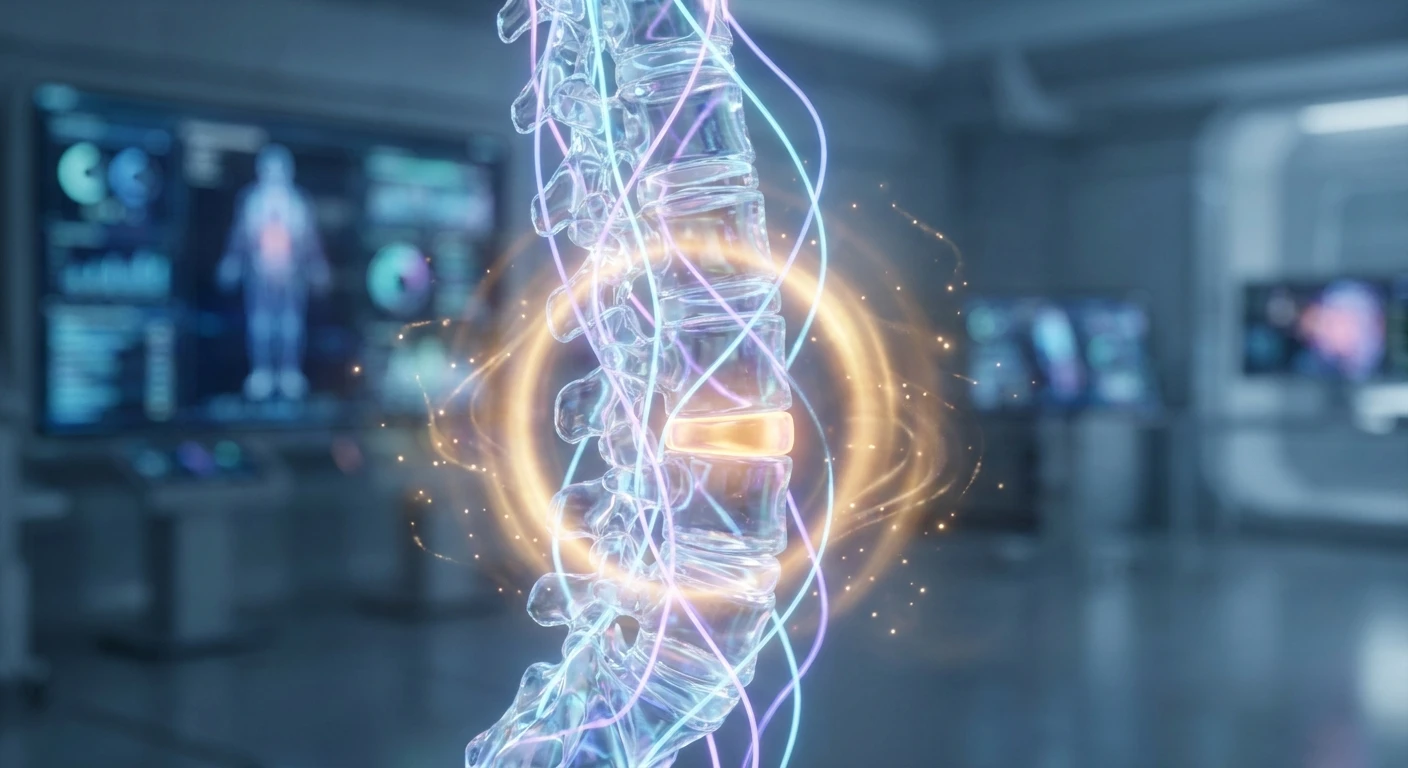
What You Really Need to Know About an Annular Fissure
If you just heard your doctor mention an annular fissure, you might be feeling a bit of panic right now. Hearing that something is torn in your back is terrifying. But look, I am here to tell you that it is entirely manageable, and I am going to walk you through exactly what is happening inside your spine. My buddy Taras, living right here in Kyiv, called me frantically a few months ago after helping move heavy portable generators during the winter power outages. He felt a sharp pop in his lower back, could barely stand up straight, and the MRI later showed a tear in his spinal disc.
He thought his active life was completely over. He assumed surgery was the only option. But here is the truth: the body is incredibly resilient. What he experienced was extremely painful, but it was also a mechanical issue with a clear path to recovery. That is exactly what we are going to talk about right now. We will break down what this injury actually is, why it hurts so much, and the exact steps you can take to get your mobility back. You do not need to sit in the dark and worry about your future. Grab a cup of tea or coffee, get into a comfortable position, and let us get your back on the path to healing.
When we talk about this kind of injury, understanding the mechanics gives you power over the pain. The intervertebral discs in your spine act as shock absorbers between your bones. Think of them like a jelly donut. You have a tough, fibrous outer layer (the dough) and a soft, gel-like center (the jelly). When that tough outer layer develops a tear or a crack, that is precisely what a fissure is. It is not necessarily a slipped disc, and the jelly has not necessarily squeezed out yet. But the outer wall is damaged.
Knowing exactly what type of tear you are dealing with gives you a massive advantage because it dictates your recovery strategy. For example, if you have a simple concentric tear, resting and avoiding heavy lifting might be all you need. However, if you are dealing with a radial tear that reaches the outer edges of the disc, you are going to need a much more structured physical therapy routine to prevent the inner gel from fully herniating. Understanding your specific situation gives you the blueprint for fixing it.
| Type of Tear | Structural Issue | Recovery Outlook |
|---|---|---|
| Concentric Fissure | Layers of the outer disc separate from each other, splitting in a circular pattern. | Usually heals well with conservative care and basic rest. |
| Peripheral Fissure | A tear on the very outside edge of the disc, often involving the attachment to the bone. | Can be quite painful initially but responds excellently to targeted physical therapy. |
| Radial Fissure | A tear moving from the center of the disc outwards toward the edge. | Requires strict management, as it poses the highest risk for a full disc herniation. |
If you are in acute pain right now, here is exactly what you need to do to find immediate relief:
- Find a pain-free posture: Lie flat on your back with your knees bent and supported by pillows. This takes the mechanical load directly off the damaged disc.
- Use contrast therapy: Apply ice for the first 48 hours to numb the sharp pain and reduce acute swelling, then switch to heat to promote blood flow.
- Practice diaphragmatic breathing: Pain causes your muscles to tense up, which puts more pressure on the spine. Deep belly breathing helps relax the surrounding muscles.
- Stop stretching your hamstrings: Bending over to touch your toes puts massive flexion stress on the disc and can actually make the tear worse.
Origins of Disc Diagnoses
To truly understand how we treat back pain today, we have to look back at how confused doctors used to be about the spine. Decades ago, if you had crippling lower back pain, doctors would just label it “lumbago.” There was no nuance. You were either prescribed weeks of total bed rest—which we now know actually weakens the muscles and makes things worse—or you were sent straight to a surgeon. The actual structural integrity of the disc was a mystery until medical imaging caught up with human anatomy.
The Evolution of Spine Care
Everything changed with the widespread adoption of Magnetic Resonance Imaging (MRI). Suddenly, doctors could see the soft tissues. They could see the “jelly donut” in high definition. This led to a brief period where surgeons wanted to operate on every single tear they found. If they saw a crack on the scan, they assumed it needed to be cut open and repaired. But as data accumulated, the medical community realized something fascinating: many people walking around with absolutely no back pain also had these tears. This completely shifted the medical perspective from aggressive surgical intervention to a more conservative, symptom-managed approach.
The Modern State of Spinal Health
Right now, as we navigate through 2026, our approach to spinal mechanics is better than it has ever been. We have moved far beyond just staring at scans and rushing to the operating room. We now prioritize movement as medicine. The focus is on biomechanics, core stability, and letting the body’s natural inflammatory response do its job to heal the tissue. We also have amazing ergonomic tools and non-invasive therapies that keep the vast majority of patients away from surgery.
The Anatomy of the Intervertebral Disc
Let us get slightly technical for a moment, but I promise to keep it simple. Your spinal discs are incredibly complex structures. The outer layer, called the annulus fibrosus, is made up of overlapping layers of tough collagen, almost like the steel belts in a radial tire. The inner core, the nucleus pulposus, is mostly water and proteoglycans, which give it that bouncy, shock-absorbing quality. When you twist and lift something heavy at the same time, you create shear force. That shear force is usually what snaps those collagen fibers, creating the painful crack we are talking about.
Why the Pain is So Intense
You might be wondering why a tiny crack in a piece of cartilage hurts worse than a broken bone. The answer lies in your nervous system. The very outer third of the disc is packed with nerve endings, specifically from the sinuvertebral nerve. When the disc tears, these nerves are directly exposed to inflammatory chemicals leaking from the inside of the disc. It is like pouring lemon juice on a paper cut, but inside your spine. Furthermore, the surrounding muscles instantly go into a massive spasm to create a natural splint, locking your back up completely.
Here are some crucial scientific facts about your spinal discs that explain the healing process:
- Avascular nature: Discs have almost no direct blood supply. They get their nutrients through a process called imbibition, which means they absorb fluids like a sponge when you move.
- Collagen types: The outer layers are made of Type I collagen (built for tension), while the inner layers are Type II collagen (built for compression).
- Slow healing rates: Because of the poor blood supply, tissue repair in the spine takes significantly longer than it does in a muscle or a bone.
- Chemical inflammation: The gel inside the disc is highly acidic. When it touches the outer nerves, the pain is largely chemical, not just mechanical.
So, how do we actually fix this? You need a solid, actionable plan. Here is a 7-Day acute recovery protocol to get you moving again without making the tear worse.
Day 1: Strict Active Rest
Your only job today is to calm the nervous system down. Find the most comfortable position possible. For most people, this is lying flat on the floor with your calves resting up on a chair or couch. This places the spine in a neutral position. Apply ice packs for 15 minutes every two hours. Do not try to stretch, do not test your range of motion, and do not push through pain. Just breathe and rest.
Day 2: Inflammation Control
The swelling is likely peaking today. Continue with the neutral resting positions, but start taking short, gentle walks around your house. Walking for just two or three minutes at a time helps pump fluid out of the inflamed area. If your doctor has cleared you for over-the-counter anti-inflammatory medication, this is the time to use it to keep the chemical pain at bay.
Day 3: Gentle Mobility
We are not stretching, but we are moving. Try doing very gentle pelvic tilts while lying on your back. Just rock your pelvis slightly back and forth to get the joints moving without putting stress on the disc. The goal is to start stimulating that “sponge” effect we talked about earlier, bringing fresh nutrients into the disc space.
Day 4: Heat Therapy Introduction
Now that the initial acute, fiery inflammation is subsiding, you can swap the ice for a heating pad. Heat will relax the intense muscle spasms in your lower back. Apply heat for 20 minutes before you get up to walk. You should start feeling a slight reduction in the sharp, stabbing nature of the pain, though a dull ache will remain.
Day 5: Isometric Core Activation
It is time to wake up the muscles that protect your spine. We do this with isometric exercises—meaning the muscles contract, but your body does not actually move. Try doing a very light “bird dog” exercise or just bracing your stomach muscles as if someone is about to poke you in the stomach. Hold for five seconds, then release. This builds a protective corset around the injury.
Day 6: Walking and Extension
Increase your walking time today. Try to get outside and walk on flat ground for 10 to 15 minutes. Additionally, try lying on your stomach and propping yourself up just on your elbows (like a sphinx). This gentle extension helps push any bulging disc material away from the sensitive nerve roots at the back of the spine.
Day 7: Assessment and Escalation
Take stock of how you feel. The sharp, breath-taking pain should be significantly reduced. If you are improving, you can gradually increase your daily activities and start looking into a formal physical therapy program. If the pain is worse, or if you feel numbness or tingling shooting down your leg, it is time to call your doctor back for a deeper assessment.
When it comes to back injuries, there is a lot of terrible advice out there. Let us clear up some of the most common misunderstandings.
Myth: You need immediate surgery for a torn disc.
Reality: The vast majority of these injuries heal entirely with conservative care, physical therapy, and time. Surgery is rarely the first option.
Myth: Bed rest for a month is the best cure.
Reality: Prolonged bed rest weakens your core muscles and stiffens your joints. Controlled, gentle movement is essential for healing the cartilage.
Myth: A fissure is exactly the same thing as a herniated disc.
Reality: A fissure is just the tear in the outer wall. A herniation occurs when the inner gel actually squeezes out through that tear. They are related, but distinct.
Myth: If your back hurts, you should immediately stretch your hamstrings.
Reality: Stretching your hamstrings requires spinal flexion, which actually puts maximum pressure on the injured disc and can make the tear much worse.
Can an annular fissure heal on its own?
Yes, absolutely. With proper mechanical management, avoiding aggravating movements, and giving it time, the outer layers of the disc can form scar tissue and heal.
How long does it take to recover?
Acute pain usually subsides in a few weeks, but complete healing of the cartilage can take anywhere from 3 to 6 months depending on the severity of the tear.
Is a tear the same as a bulging disc?
No. A bulge is when the disc pushes outward but the outer wall is intact. A tear means the wall itself has actually cracked or split.
Should I get a massage for the pain?
A light massage can help relieve the secondary muscle spasms, but deep tissue massage directly over the spine won’t fix the internal structural tear.
Can I run with this injury?
You should completely avoid high-impact activities like running until you are entirely pain-free and cleared by a physical therapist. Stick to walking for now.
Do I need an MRI right away?
Not always. Most doctors will start with conservative treatment and only order an MRI if the pain persists for several weeks or if you develop neurological symptoms.
Will a standard X-ray show the tear?
No. X-rays only show bones. They cannot show soft tissues like cartilage, nerves, or disc tears. Only an MRI can clearly visualize the anatomy of the disc.
What sleeping position is best?
Sleeping on your back with a pillow under your knees, or on your side with a thick pillow between your knees, usually keeps the spine in the most neutral, pain-free alignment.
Look, navigating back pain is incredibly stressful, but you are not broken. Your body has an amazing capacity to repair itself once you stop aggravating the injury and start giving it the right environment to heal. By understanding the mechanics of your spine, pacing your recovery, and sticking to a smart movement plan, you can get back to living your life without fear. If you found this breakdown helpful, share it with a friend who is struggling with back pain, and be sure to consult with a qualified physical therapist to build a recovery routine tailored exactly to you!





Leave a Reply