

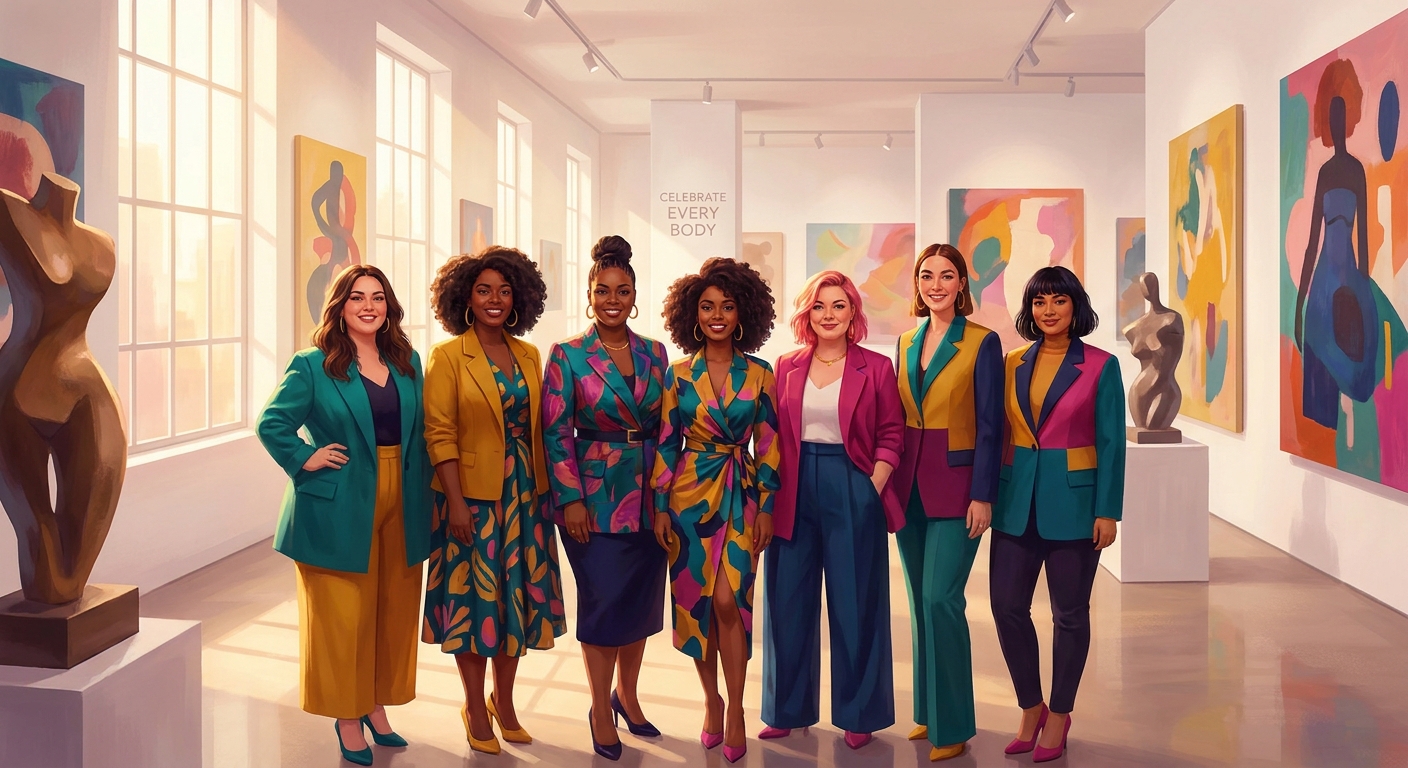
The real truth about hip dips and why you should stop stressing
I was grabbing a flat white at a little neighborhood cafe near Khreshchatyk here in Kyiv last Tuesday when my friend suddenly vented about her outfit. She was wearing a gorgeous fitted dress, but she felt entirely insecure because of her hip dips. It struck me how often we panic over totally natural bodily features just because social media filters try to erase them. If you are stressing over your hip dips right now, take a deep breath and listen. They are simply an inward curve situated right below your hip bone, and having them is entirely normal. They do not mean you are out of shape, and they definitely do not mean your body is flawed.
As we navigate beauty standards in 2026, it is high time we stop treating our natural skeletal structure as a problem to be solved. So many women spend countless hours doing exhausting side leg raises in the gym, hoping to fill in a space that is literally dictated by their bones. Let me tell you right away: your skeleton is perfectly fine. Being built like a human being is a beautiful thing. Instead of fighting your anatomy, we are going to look closely at what creates this shape, why it happens, and how to completely shift your mindset so you can rock any outfit with total confidence.
The underlying reality of your hip anatomy goes far beyond fitness trends. When you understand the biological foundation of your body, you immediately stop chasing impossible ideals. I have worked with countless clients who spent years hiding under baggy sweaters just because they misunderstood how human bodies are actually put together. It is time to drop the anxiety, grab your favorite drink, and chat about the fascinating reality behind this totally normal physical trait.
Understanding the structure and styling of your natural shape
To really appreciate your body, you need to understand exactly what is happening beneath the skin. That indentation you see is technically called a trochanteric depression. It occurs where the skin is tightly attached to the deeper portion of your thigh bone. Some people have a higher pelvis, which makes the indentation much more prominent. Others have a wider pelvis or a different distribution of fat, which might make the curve less visible. Absolutely none of these variations are wrong; they are just unique blueprints of human architecture.
You might be wondering how to dress for your specific shape without feeling self-conscious. While you should always wear whatever makes you feel happy, certain fabrics and cuts interact differently with our curves. Choosing the right garments can completely change how you view yourself in the mirror.
| Clothing Category | Visual Impact | Best Styling Tip |
|---|---|---|
| High-Waisted Trousers | Elongates the legs and supports the waistline | Choose thicker, structured fabrics like denim or wool blends to smooth the silhouette. |
| A-Line Skirts | Balances out lower body proportions gracefully | Pair with a tightly fitted top to highlight your waist while letting the skirt flow naturally. |
| Bodycon Dresses | Hugs every natural curve unapologetically | Opt for materials with textured patterns or side-ruching to celebrate the shape rather than fighting it. |
We often forget that confidence is a learned skill, not an inherited trait. You can literally train your brain to stop obsessing over perceived flaws. Here are three incredibly effective ways to shift your mindset starting right now:
- Curate your social media feed ruthlessly: Stop following influencers who heavily edit their photos to remove natural textures and curves. Fill your feed with diverse body types that look like yours.
- Focus entirely on physical strength: Shift your workout goals from aesthetic corrections to functional power. When you realize how strong your legs and glutes are, you will care much less about minor aesthetic indentations.
- Reframe your inner dialogue: Every single time you look in the mirror and criticize your shape, immediately compliment a different aspect of your body. Break the cycle of negative self-talk forcefully.
The value of understanding this structural truth cannot be overstated. When you finally accept that you cannot exercise away your bone structure, a massive weight lifts off your shoulders. You regain the hours you previously wasted researching bizarre spot-reduction exercises, and you can redirect that energy into building a life that genuinely excites you.
The anatomical origins of the hip curve
If we look back through art history, we see that humans have always had these natural indentations. Walk through any classic museum and look at the Renaissance paintings. The women depicted by master artists like Botticelli and Rubens clearly show distinct curves, complete with natural waistlines, stomach rolls, and yes, skeletal indentations along the thighs. Historically, this feature was just seen as a standard part of the human form. Nobody thought twice about it because there was no mass media industry profiting off the creation of new physical insecurities.
Evolution of toxic beauty standards
Things took a sharp turn for the worse during the ultra-thin obsession of the 1990s and early 2000s. Suddenly, magazines pushed the idea of a perfectly smooth, straight line from the waist down to the knee. This biologically impossible standard was enforced by heavily airbrushed photos, making an entire generation of young people feel inadequate. Then came the era of extreme cosmetic procedures, where people started getting fillers just to achieve a perfectly round, cartoon-like silhouette. It became a multi-million dollar industry built entirely on making us hate our natural skeletal structure.
The modern state of body acceptance
Thankfully, the culture is shifting drastically. By 2026, we are seeing a massive rebellion against the hyper-filtered, artificial aesthetics of the past decade. People are utterly exhausted by the pressure to look like heavily edited avatars. The modern state of body acceptance is not just about tolerating our bodies; it is about actively celebrating anatomical reality. Influencers are proudly showing off their unedited shapes, and major fashion brands are finally designing clothes that fit real human bodies rather than static mannequins. The cultural conversation has matured, realizing that true style is about confidence, not conformity.
Understanding the trochanteric depression
Let us get slightly technical for a moment, but I promise to keep it simple and conversational. The medical term for this area is the trochanteric depression. Your pelvis has a top edge called the ilium. Below that is your femur, the large thigh bone, which has an outward bump at the top called the greater trochanter. The distance between your ilium and your greater trochanter determines the size of the space we are talking about. If your bones sit further apart, the space is naturally wider, creating a deeper visible curve on the outside of your leg.
Bone structure versus body fat distribution
Another major factor is how your muscle and fat are distributed across your lower body. Your gluteus medius muscle sits in this general area, but even if you build that muscle significantly through heavy weightlifting, it does not perfectly fill in the gap. In fact, sometimes building the surrounding muscles can make the indentation look slightly more pronounced! Furthermore, human bodies store fat in highly individualized patterns dictated by genetics.
- Your skeletal frame is the primary blueprint; no amount of dieting changes the distance between your pelvic bone and femur.
- Connective tissues tether your skin to the deeper fascia around the thigh, naturally pulling the skin inward.
- Fat distribution is genetically predetermined; you cannot choose where your body stores or loses fat, despite what marketing campaigns claim.
- Collagen density in the skin affects how prominent the transition between muscle and bone appears visually.
Knowing this biology is incredibly freeing. When you realize that the shape of your lower body is dictated by hard bones and genetic blueprints, you stop feeling guilty for not having a perfectly round silhouette. It is quite literally just the way you were built, and it functions perfectly to help you walk, run, and dance.
Day 1: Wardrobe audit for your natural shape
Start your journey by pulling out every piece of clothing that makes you feel bad about your body. If you own pants that aggressively pinch your waist or skirts that make you hyper-focus on your hips, put them in a donation box immediately. Your clothes should serve you, not the other way around. Keep only the items that make you feel genuinely comfortable and unstoppable.
Day 2: Glute activation exercises for strength
Instead of doing exercises to change your appearance, do them to build functional strength. Spend today focusing on glute bridges, squats, and lunges. Feel the raw power in your lower body. Notice how your muscles fire up and support your joints. This shifts your brain away from aesthetics and firmly into appreciating your physical capabilities.
Day 3: Social media cleanup and digital detox
Take thirty minutes today to unfollow absolutely anyone who makes you feel insecure about your shape. If an account relies on heavy editing or promotes extreme cosmetic fixes for normal bodily features, hit the unfollow button. Replace them with creators who promote radical self-acceptance and realistic fitness goals.
Day 4: Trying out structured fabrics
Head to a local store or browse your closet to experiment with different fabric weights. Try on a pair of heavy denim jeans or a structured linen skirt. Notice how thicker materials drape over your frame beautifully, creating strong, confident lines without clinging uncomfortably to every single minor curve.
Day 5: Hydration and skin elasticity focus
Your skin health plays a massive role in how you feel in your own body. Dedicate today to massive hydration. Drink plenty of water and spend time moisturizing your skin with a rich lotion or body oil. The act of massaging lotion into your skin is a grounding practice that helps build physical appreciation and mindfulness.
Day 6: Reclaiming your mirror confidence
Stand in front of your mirror in your underwear. Instead of immediately looking at the areas you normally criticize, force yourself to make eye contact with your reflection. State three things you love about yourself out loud. It will feel awkward at first, but this practice rewires your brain to seek out the positive instead of hunting for flaws.
Day 7: Rocking your favorite outfit without hiding
Put on that dress or pair of pants you have been avoiding. You know the one. Pair it with your favorite shoes and accessories, and go out into the world. Grab a coffee, meet a friend, or just go for a walk. Realize that nobody is judging your silhouette. They are just noticing your overall radiant energy and confidence.
Myths versus reality
Myth: You can completely get rid of them if you just do enough side leg raises and squats every single day.
Reality: Because this feature is based entirely on your skeletal structure and where your muscles naturally attach to the bone, no amount of exercise will change the fundamental shape of your pelvis.
Myth: Having them means you are carrying too much excess weight or you are totally out of shape.
Reality: They appear on athletes, bodybuilders, and people of absolutely all body fat percentages because they are tied to bone structure, not body fat.
Myth: Waist trainers and compression garments can eventually mold your body to fix the indentation permanently.
Reality: No piece of tight fabric can permanently move your bones or permanently alter your natural genetic fat distribution. They only provide a temporary visual effect.
Myth: Only specific body types, like pear shapes, experience this physical feature.
Reality: They are a universal human trait found across all heights, weights, and overall body shapes. They are just more visually prominent on some skeletal frames than others.
Frequently Asked Questions
Are hip dips considered a physical deformity?
Absolutely not. They are a completely standard, biologically normal variation of human anatomy. Calling them a deformity is like calling a slightly curved nose a deformity; it is just a natural shape.
Can I fill them in with a specific diet?
No diet can target fat storage in one specific area of your body. Eating well improves your overall health, but it will not magically fill in the spaces created by your bone structure.
Do men have them too?
Yes, absolutely. Men have the exact same basic skeletal framework. However, because men tend to store fat differently and wear less form-fitting clothing on average, society rarely discusses it in relation to male bodies.
Why are mine so incredibly noticeable?
It comes down to the distance between your ilium and your greater trochanter, combined with how your body naturally distributes its fat. A taller pelvis usually makes the curve more distinct.
Does running or cardio make them look worse?
Running builds leg muscle and can lower overall body fat. If you lose fat around your hips, the skeletal indentation might become slightly more visible, but it certainly does not make your body look worse.
Are they exactly the same thing as a muffin top?
No. A muffin top refers to skin or fat spilling over the waistband of tight pants. The structural indentation we are discussing is located lower down the leg, right at the thigh joint.
Can cosmetic surgery completely remove them?
While some doctors perform fat grafting or inject fillers to temporarily round out the area, these procedures carry medical risks, are very expensive, and often do not yield permanent or natural-looking results.
Will gaining weight hide the indentation?
It heavily depends on your specific genetics. For some, gaining weight fills out the area. For others, the body stores the new fat above and below the area, making the indentation look even deeper.
How long does it take to learn to love my shape?
It is a gradual process. Some days you will feel incredibly confident, and other days you might struggle. Be patient with yourself and stick to the positive habits we discussed.
At the end of the day, your body is an amazing instrument that carries you through life, not a static ornament meant to perfectly fill out a specific style of dress. Embrace your natural architecture, stop stressing over fake internet standards, and start living out loud. If you found this breakdown helpful, share it with a friend who needs a reminder of how flawless they naturally are!




Leave a Reply