

When Numbness on One Side of the Body is Most Likely a Symptom of Danger
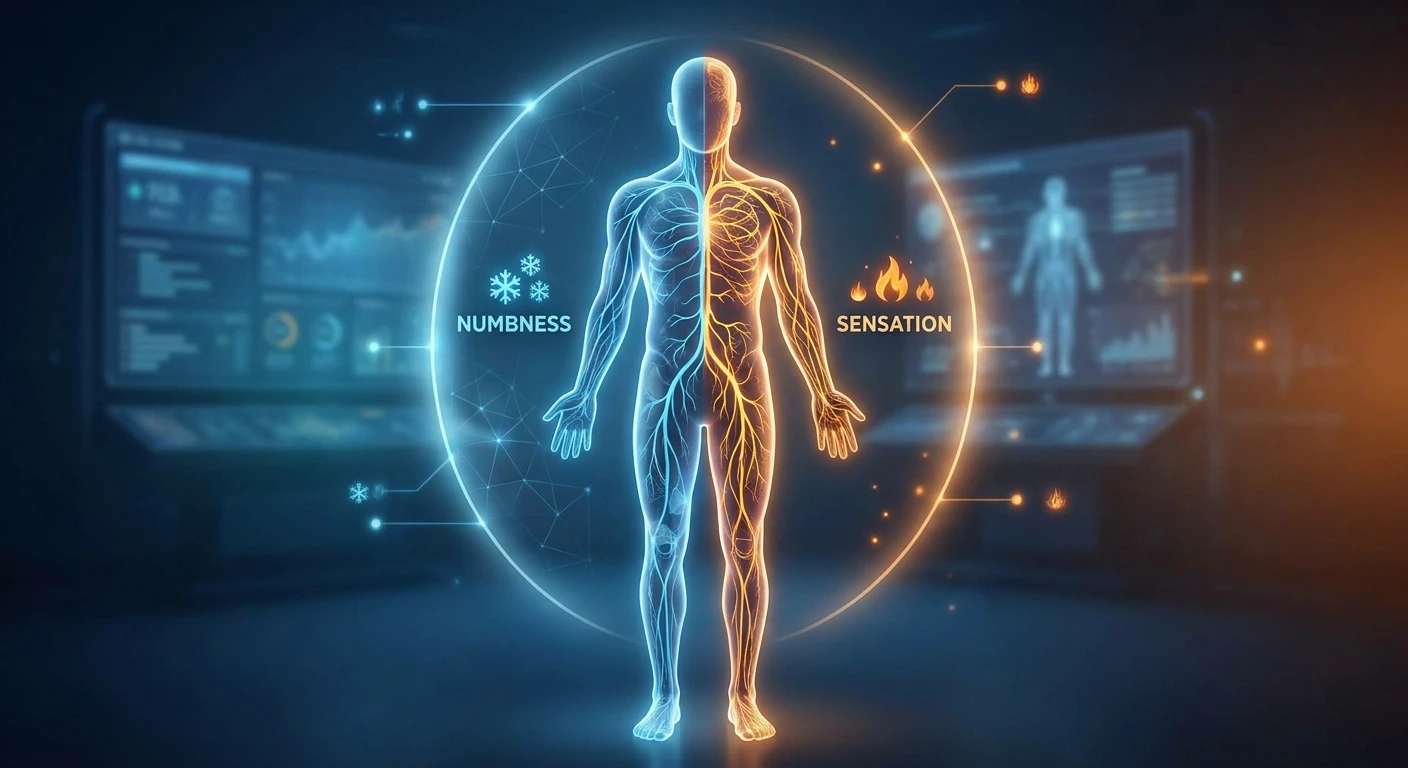
When you suddenly realize that numbness on one side of the body is most likely a symptom of a severe neurological event, your immediate reaction can quite literally save a life. The human body sends a vast array of signals when something goes wrong, but an abrupt loss of sensation, tingling, or heaviness that strictly divides the left or right hemisphere of your physical form is an absolute red flag. We rely entirely on a highly complex central nervous system to translate sensory inputs from our fingertips, toes, and skin up the spinal cord to the brain. When this superhighway of information is suddenly cut off on just one side, it indicates a localized interruption—most commonly in the brain itself.
Experiencing this unilateral lack of sensation can be terrifying. You might try to reach for a cup of coffee only to find your arm feels disconnected, or attempt to smile and feel your cheek sagging. This is not the time to wait and see if the feeling returns. The brain operates on a strict supply of oxygen and blood, and any delay in addressing what might be a vascular blockage or rupture can result in permanent loss of tissue. Understanding exactly why this happens, how to identify the root cause, and what steps to take instantly gives you the power to protect yourself and your loved ones from devastating long-term consequences.
Read also: How to Treat a Toe Blister Fast and Stop the Pain; Rash on Top of Foot Care Tips.
The Core Mechanics and Dangers of Unilateral Sensory Loss
To fully grasp why this specific physical reaction is so alarming, we must look at how the brain maps the human body. Our brains are divided into two distinct hemispheres. Thanks to a biological cross-wiring process called decussation, the right hemisphere of your brain controls the motor and sensory functions of the left side of your body, and vice versa. Therefore, when you experience widespread numbness on exactly one half of your body, the problem is rarely in the limbs themselves. Instead, it points directly to an issue in the corresponding opposite side of the brain. The value of recognizing this immediately is immeasurable. First, catching an ischemic stroke within the critical three-hour window allows doctors to administer clot-busting medications, drastically improving recovery chances. Second, identifying severe nerve compression early can prevent a lifetime of chronic pain and mobility issues.
The conditions triggering this symptom range from high-level medical emergencies to serious structural defects in the spine. For instance, stroke and tumors are the conditions most closely associated with a sudden, unprovoked onset of unilateral numbness. On the other hand, if the numbness comes with intense, shooting pain down one specific limb, a pinched nerve or herniated disc may be the culprit. Below is a breakdown of how different symptoms correlate to potential medical conditions.
| Symptom Context & Presentation | Potential Medical Condition | Urgency Level |
|---|---|---|
| Sudden facial drooping, arm weakness, and slurred speech | Ischemic or Hemorrhagic Stroke / TIA | Immediate Emergency (Call 911) |
| Gradual numbness with severe headache and visual aura | Hemiplegic Migraine | Urgent / High Priority |
| Localized tingling spreading down one arm or leg after heavy lifting | Spinal Disc Herniation / Nerve Compression | Moderate / Needs Scheduled Evaluation |
If you or someone nearby complains of these feelings, you must act decisively. Memorize the following protocol to evaluate the situation:
- Ask the person to smile broadly and observe if one side of their face droops or remains completely immobile.
- Instruct them to close their eyes and raise both arms straight out in front of them for ten seconds; watch to see if one arm slowly drifts downward.
- Have them repeat a simple, familiar phrase to check for any slurred, bizarre, or completely absent speech.
Origins of Neurological Diagnostics
The medical understanding of the human nervous system has a long, fascinating history. Ancient physicians, notably Hippocrates in classical Greece, identified the phenomenon of sudden paralysis and sensory loss, naming it “apoplexy” (meaning “struck down by violence”). However, for centuries, early doctors did not possess the anatomical knowledge to connect apoplexy to brain function. They mistakenly attributed these devastating events to an imbalance of bodily humors or environmental miasmas. It was not until the Renaissance and the advent of detailed human dissection that pioneering anatomists began to map the precise pathways of the cranial nerves and the spinal cord, finally realizing that the brain was the undisputed command center of physical sensation.
The Evolution of Stroke Response
By the late 19th and early 20th centuries, medical science began to differentiate between various types of strokes and nerve disorders. Researchers discovered that blood supply blockages (ischemia) or bleeding in the brain (hemorrhage) were the primary drivers of what they previously called apoplexy. Yet, even with this knowledge, doctors had little to offer in terms of acute treatment; a stroke was largely considered a fatal or permanently disabling event that simply had to run its course. It wasn’t until the late 1990s, with the widespread approval of tissue plasminogen activator (tPA) therapies, that medicine finally had a weapon to reverse the effects of a stroke in progress, provided the patient arrived at the hospital in time.
Modern State of Nerve Compression and Imaging
Today, our diagnostic capabilities are incredibly precise. The invention of the CT scan and the Magnetic Resonance Imaging (MRI) machine revolutionized neurology. Doctors can now look directly inside the skull and spinal column to pinpoint exactly where damage, irritation or pressure on the nerves is occurring. This technology allows us to instantly differentiate between a bleeding brain aneurysm, a solid brain tumor pressing against the sensory cortex, or a simple benign cyst. Furthermore, modern neurological science has mapped the exact dermatomes—areas of the skin supplied by specific nerve roots—allowing physicians to trace numbness in a specific finger all the way back to the exact vertebra in the neck or back.
The Central vs. Peripheral Nervous System
To truly understand why your body goes numb, you must look at the cellular biology of your nervous system. The system is divided into two distinct parts: the Central Nervous System (CNS), comprising the brain and spinal cord, and the Peripheral Nervous System (PNS), the vast web of nerves branching out to your limbs and organs. When widespread numbness hits exactly half the body, the failure is almost always located in the CNS. The somatosensory cortex, a specific strip of brain tissue across the top of your brain, processes all tactile feedback. If the blood vessels feeding the right side of this cortex become blocked, the tissue rapidly begins to starve for oxygen. As the neurons fail, they can no longer process the incoming signals from the left side of your body, resulting in total or partial numbness (hemianesthesia).
How Demyelination and Ischemia Trigger Numbness
Beyond blood flow issues, nerve fibers themselves can become diseased. Many nerve axons are wrapped in a protective fatty layer called myelin, which acts much like the rubber insulation around an electrical wire. Certain autoimmune diseases, such as Multiple Sclerosis, mistakenly attack and destroy this myelin. This process, known as demyelination, disrupts the electrical signals traveling to and from the brain, leading to severe numbness, tingling, or burning sensations. In other cases, viral infections like shingles or herpes zoster infection can attack specific nerve roots, though this typically presents with a highly localized, painful rash rather than full-body hemiparesis.
- Ischemia (lack of blood flow) kills roughly two million brain cells every single minute it remains untreated during a stroke.
- The term “neuropathy” refers to general disease or malfunction of the nerves, often presenting as a “pins and needles” sensation.
- Patients suffering from diabetes are highly susceptible to peripheral neuropathy, though this usually affects both feet or both hands simultaneously, rather than cleanly dividing the body in half.
- While sleeping awkwardly on a limb can temporarily compress a nerve and cause numbness, this benign condition resolves within minutes and is strictly confined to the compressed limb.
Day 1: Immediate Emergency Assessment (The FAST Protocol)
If you or someone around you experiences sudden one-sided numbness, Day 1 requires absolute urgency. Do not attempt to drive to the hospital; dial emergency services immediately. Paramedics can begin crucial neurological assessments the moment they arrive, measuring blood pressure, checking blood sugar levels, and pre-alerting the stroke team at the nearest comprehensive stroke center. The immediate priority is determining if an ischemic event is occurring, as the treatment window is incredibly narrow.
Day 2: Navigating the Acute Hospital Stay and Diagnostic Scans
Once in the emergency department, expect a whirlwind of medical imaging. The patient will likely undergo a non-contrast CT scan to rule out bleeding in the brain. If no hemorrhage is found, an MRI might follow to look for early signs of tissue damage or to identify a potential brain tumor. Blood tests will check for clotting disorders, cholesterol levels, and signs of infection. The goal of Day 2 is stabilization and obtaining a concrete, scientifically backed diagnosis.
Day 3: Consulting with a Specialized Neurologist
After the acute crisis is managed, Day 3 involves a deep consultation with a neurologist. This specialist will review all imaging and conduct detailed reflex, sensory, and motor tests. They will map the exact extent of the numbness. If the cause was determined to be a pinched spinal nerve rather than a stroke, an orthopedic surgeon or a neurosurgeon might be brought in to discuss potential interventions like steroid injections or spinal decompression surgery.
Day 4: Establishing a Baseline for Physical Therapy
If the numbness persists, Day 4 marks the beginning of rehabilitation. A physical therapist will evaluate the patient’s balance, coordination, and strength. Even if a limb is merely numb and not paralyzed, the lack of sensory feedback makes walking and holding objects incredibly dangerous and difficult. Therapists will introduce exercises designed to retrain the brain—a concept known as neuroplasticity—encouraging healthy brain tissue to take over the functions of the damaged areas.
Day 5: Managing Neuropathic Pain and Sensory Changes
As the initial shock of the injury wears off, numbness often evolves into neuropathic pain. Patients may experience burning, freezing, or electrical shock sensations in the affected limbs. Day 5 focuses on pharmacological management. Doctors may prescribe specific nerve pain medications (like gabapentin or pregabalin) or certain antidepressants that have proven highly effective at calming hyperactive, damaged nerves.
Day 6: Implementing Dietary and Lifestyle Modifications
Preventing a secondary event is just as critical as treating the first. Day 6 is about systemic changes. If the numbness was caused by vascular issues, patients must adopt a heart-healthy, low-sodium diet, begin a monitored exercise regimen, and completely cease smoking. Managing high blood pressure and diabetes aggressively is mandatory to keep the blood vessels in the brain clear and functioning optimally.
Day 7: Building a Long-Term Preventive Strategy
By the end of the first week, the focus shifts entirely to the future. Day 7 involves setting up a comprehensive outpatient care team, scheduling regular follow-up MRIs, and perhaps joining a support group. Recovering from a severe neurological event is a marathon, not a sprint. Patients must establish a strong routine of daily medication compliance, continued physical therapy, and strict vigilance for any returning symptoms.
Myths and Reality Surrounding Sensory Loss
Myth: Numbness on one side always means you are currently having a massive, fatal stroke.
Reality: While a stroke is the most urgent primary concern, other conditions such as hemiplegic migraines, multiple sclerosis flare-ups, or even severe focal seizures can mimic these exact symptoms perfectly. It always requires professional medical diagnosis.
Myth: You should vigorously rub, massage, or shake the numb limb to restore blood flow and fix the problem.
Reality: If the numbness originates from a brain injury like a stroke or a central nervous system tumor, rubbing the arm or leg will do absolutely nothing to help. The problem is in the brain’s sensory reception, not the physical limb itself, and delaying emergency calls to try home remedies can be deadly.
Myth: Only elderly individuals experience sudden one-sided numbness.
Reality: Strokes, autoimmune demyelination, and severe spinal nerve compressions can strike adults at any age. Younger adults are increasingly experiencing vascular neurological events due to lifestyle factors, undiagnosed heart defects, or blood clotting disorders.
Can severe anxiety mimic unilateral numbness?
Yes. Hyperventilation during a severe panic attack can cause tingling and numbness, but this usually affects both sides of the body simultaneously (typically the hands, feet, and around the mouth), rather than cleanly dividing the left and right hemispheres.
How quickly must tPA be administered for a stroke?
For eligible ischemic stroke patients, clot-busting tPA medication must generally be administered within 3 to 4.5 hours of the onset of symptoms to be safe and effective, making rapid hospital transport critical.
Does sleeping awkwardly cause whole-body numbness?
No. While laying on an arm can compress a local nerve and make that specific limb “fall asleep,” it will not cause the entire left or right side of your face, torso, and leg to go numb simultaneously.
What is the difference between a TIA and a full stroke?
A Transient Ischemic Attack (TIA), often called a mini-stroke, presents with the exact same numbness and weakness, but the blockage clears on its own, and symptoms resolve within a few minutes to hours. It is a massive warning sign of an impending full stroke.
Can spinal issues cause numbness on one side?
Yes. A severely herniated disc in the cervical (neck) or lumbar (lower back) spine can compress a nerve root on one side, leading to unilateral numbness, though it is usually restricted to the specific arm or leg innervated by that nerve.
Are there specific migraines associated with numbness?
Yes. Hemiplegic migraines are a rare subtype of migraine headaches that cause temporary motor weakness, visual auras, and severe numbness strictly on one side of the body, closely mimicking a stroke.
Will the lost sensation eventually return?
Recovery depends entirely on the root cause and the speed of treatment. Sensation lost to a TIA or a treated pinched nerve often returns fully. However, tissue death from a completed stroke may result in permanent sensory deficits, though physical therapy can help the brain adapt.
The Final Word on Neurological Health
Navigating the terrifying experience of sudden physical detachment requires a cool head and immediate action. Recognizing that numbness on one side of the body is most likely a symptom of a vascular or structural brain emergency is your greatest defense mechanism. Never attempt to sleep off these symptoms or assume they will simply pass. The human brain has an incredible capacity for healing and neuroplasticity, but only if you provide it with rapid medical intervention. If you or a loved one ever experiences sudden unilateral weakness, tingling, or a complete loss of feeling, dial emergency services instantly and trust the medical professionals to protect your future.





Leave a Reply