

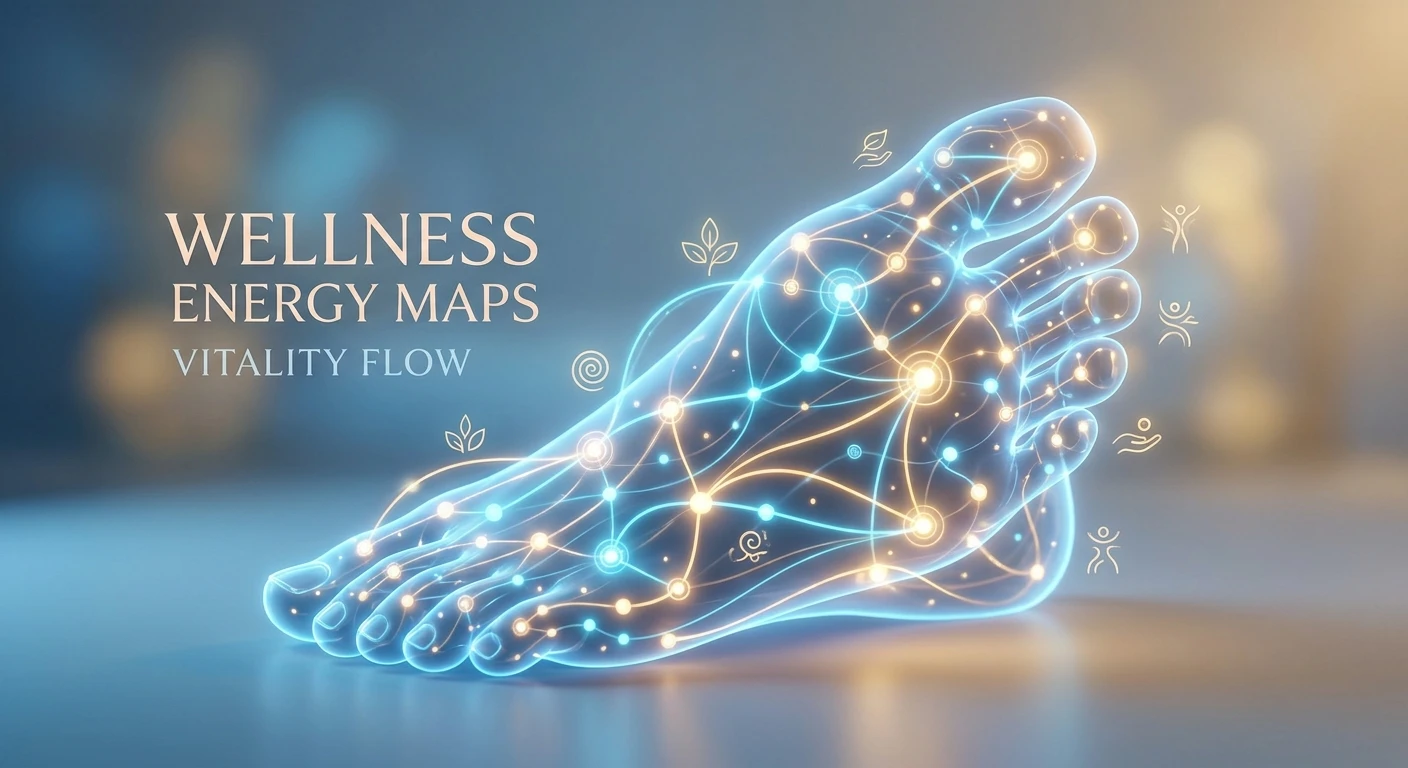
Understanding Foot Pressure Points for Total Wellness
Mapping out foot pressure points offers a direct pathway to alleviating physical tension and promoting profound full-body relaxation. The human foot is a complex marvel of biomechanical engineering, bearing the entire weight of the body while navigating diverse terrains. Beyond sheer mechanical support, ancient therapeutic traditions and modern holistic practices suggest that the soles of the feet act as a detailed map corresponding to various organs, glands, and biological systems. By applying calculated, rhythmic pressure to these highly sensitized areas, individuals can stimulate thousands of nerve endings, encourage optimal blood circulation, and trigger the body’s natural healing mechanisms.
Operating through intricate neural pathways that connect the body’s extremities directly to the central nervous system, this practice goes far beyond the benefits of a standard massage. Activating these specific somatic zones facilitates a biochemical response that lowers stress hormones and elevates mood-enhancing neurotransmitters. Implementing a structured approach to mapping the pedal extremities ensures that every movement serves a distinct physiological purpose. Whether the goal is to ease a persistent tension headache, soothe chronic digestive discomfort, or simply unwind after a demanding day of physical labor, precise stimulation provides a reliable, non-invasive method for systemic maintenance. Engaging with this reflex map regularly builds a robust foundation for long-term physical resilience and mental clarity.
Read also: Numbness On One Side of the Body is Most Likely a Symptom Of; Lower Back and Thigh Pain Female: Causes and Relief.
The Mechanics of Healing Through Pedal Stimulation
Engaging directly with specific somatic zones yields tangible physiological benefits that extend far beyond the immediate sensation of touch. Neglecting the health of your lower extremities often results in localized issues like plantar fasciitis, but it can also manifest as systemic fatigue, poor posture, and compromised joint mechanics. Conversely, systematic manipulation of the plantar surface actively clears fascial restrictions, thereby reducing the burden on the musculoskeletal system. The core value proposition of this practice lies in its dual capacity for immediate symptomatic relief and long-term autonomic nervous system regulation. Two distinct examples illustrate this effectively. First, consider sleep hygiene: actively massaging the apex of the big toe, which corresponds neurologically to the brain and pineal gland, can naturally stimulate melatonin production and facilitate a deeper, more restorative sleep cycle. Second, post-workout recovery is significantly accelerated when targeted compression is applied to the central arch, prompting the lymphatic system to clear metabolic waste more efficiently.
| Zone Location | Associated Body System | Expected Physiological Benefit |
|---|---|---|
| Tips of the Toes | Brain, Sinuses, and Head | Relief from tension headaches and sinus congestion |
| Center of the Arch | Digestive Organs (Stomach, Intestines) | Reduction in bloating and improved metabolic motility |
| Base of the Heel | Lower Back and Sciatic Nerve | Alleviation of lumbar stiffness and sciatic pain |
To safely and effectively begin integrating this modality into your daily routine, it requires adherence to a precise methodology. Executing the correct technique prevents bruising and maximizes the therapeutic yield.
- Sit in a stable, comfortable position, crossing one leg over the opposite knee to allow full visual and physical access to the sole.
- Utilize the pad of your thumb to apply a firm, consistent compression to the target zone, maintaining the hold for exactly fifteen to thirty seconds.
- Gradually release the downward force and transition into a slow, circular massage to encourage immediate localized blood flow to the newly stimulated tissues.
- Breathe deeply from the diaphragm throughout the process to ensure oxygenation of the blood and to promote a parasympathetic state of calm.
The Ancient Origins of Reflexology
The practice of manipulating somatic zones for systemic health is deeply rooted in antiquity, crossing multiple independent cultures. Archaeological evidence discovered in the Egyptian tomb of Ankhamahor, often referred to as the Physician’s Tomb, dates back to 2330 BCE. The hieroglyphics vividly depict practitioners applying focused compression to the hands and feet of patients. Simultaneously, ancient Chinese medical texts, including the foundational Yellow Emperor’s Classic of Internal Medicine, detailed the intricate networks of meridians and life energy (Qi) that terminate at the extremities. These early civilizations recognized intuitively what modern science is now mapping technologically: the extremities serve as vital control panels for the entire biological machine.
The Evolution of Zone Therapy
The transition from ancient mystical practice to structured therapeutic discipline occurred largely in the early twentieth century. Dr. William Fitzgerald, an ear, nose, and throat specialist, introduced the concept of “Zone Therapy” to the Western medical establishment. He hypothesized that the human body could be divided into ten longitudinal zones, with each zone running continuously from the top of the head down to the tips of the toes. He observed that applying intense pressure to a specific point within one zone on the foot could induce an anesthetic effect in a corresponding organ within that same zone. This conceptual framework laid the empirical groundwork for what would eventually become modern reflex mapping.
The Modern State of Foot Mapping
Building upon Dr. Fitzgerald’s foundation, physical therapist Eunice Ingham meticulously refined the practice in the 1930s. She mapped the entire anatomical structure onto the plantar surface, establishing the detailed anatomical charts utilized globally today. Currently, this mapped stimulation is heavily integrated into modern physical rehabilitation protocols, elite athletic recovery programs, and palliative care settings. Clinical integration has moved the practice from the fringes of alternative medicine into mainstream complementary therapy, primarily utilized for non-pharmacological pain management and severe stress reduction.
Neurological Pathways and Reflex Actions
The efficacy of this targeted stimulation is largely explained by the complex architecture of the central and peripheral nervous systems. The gate control theory of pain suggests that non-painful tactile input closes the “gates” to painful input, preventing pain sensation from traveling to the central nervous system. When firm, sustained compression is applied to the sole, it stimulates large-diameter mechanoreceptors. The signals from these mechanoreceptors travel to the dorsal horn of the spinal cord faster than the signals from small-diameter nociceptors (pain receptors). This physiological race effectively blocks the transmission of pain signals to the brain, providing immediate, localized, and sometimes referred relief.
Fascial Connectivity and Blood Circulation
Beyond neurological signaling, the manipulation of the plantar surface profoundly impacts the fascial network and vascular system. Plantar fascia is a thick band of connective tissue that spans the arch, connecting directly to the Achilles tendon and the posterior fascial line that runs entirely up the back of the human body to the cranium. Manipulating this tissue initiates localized vasodilation, widening the blood vessels and prompting a surge of oxygen-rich blood to the area.
- The human foot contains approximately 7,000 to 7,200 individual nerve endings, making it one of the most highly innervated structures in the body.
- Targeted stimulation of specific pedal receptors predictably triggers the parasympathetic nervous system, measurably lowering resting heart rate and respiratory rate.
- Endorphin release in the brain is significantly elevated following a structured thirty-minute mapping session.
- Microcirculation within the distal extremities can increase by up to forty percent during and immediately after targeted tissue manipulation.
The 7-Day Protocol for Optimal Pedal Health
Establishing a consistent routine is the most reliable way to compound the benefits of targeted somatic stimulation. This seven-day structured protocol isolates specific anatomical regions to systematically address full-body wellness.
Day 1: Grounding and Basic Arch Stimulation
Begin the week by focusing strictly on the central arch of both feet. Using a closed fist, gently knead the medial arch to awaken the tissue, promoting basic digestive health and releasing the foundational tension accumulated from daily walking and standing.
Day 2: Targeting the Toes for Mental Clarity
Dedicate the second day to the digits. Systematically pinch and roll each toe from the base to the tip. This area correlates to the brain, sinuses, and cervical spine. Clearing tension here often results in reduced mental fog and rapid relief from tension headaches.
Day 3: Heel Focus for Lower Back Relief
The heel bone and the thick skin surrounding it correspond directly to the pelvic region and lower lumbar spine. Apply deep, sustained thumb pressure around the edges of the heel pad to ease sciatic nerve pressure and mitigate lower back stiffness.
Day 4: The Ball of the Foot and Lung Capacity
The padded area situated directly beneath the toes maps to the heart and lungs. Press deeply into the spaces between the metatarsal heads while taking slow, deep diaphragmatic breaths to support respiratory function and cardiovascular relaxation.
Day 5: Outer Edge Massage for Joint Mobility
Trace the lateral (outer) edge of the foot from the pinky toe down to the heel. This longitudinal line mirrors the shoulders, arms, hips, and knees. Firm, sliding strokes along this boundary can help alleviate referred joint pain and stiffness.
Day 6: Inner Edge Techniques for Spinal Alignment
The medial (inner) curve of the foot perfectly mirrors the natural curvature of the human spine. Using the side of your thumb, “walk” up the inside edge from the heel to the base of the big toe, mimicking the alignment of the vertebrae to encourage central nervous system balance.
Day 7: Full Integration and Deep Relaxation
Combine all previous techniques into a comprehensive thirty-minute session. Start at the toes and systematically work downward to the heel, ensuring no zone is ignored. Finish with a soothing, full-hand effleurage stroke to integrate the nervous system and finalize the physical relaxation.
Separating Fact from Fiction
Myth: Reflex manipulation can cure severe, chronic diseases entirely on its own.
Reality: It is a complementary therapy highly effective at managing stress, reducing pain, and supporting bodily functions, but it is not a standalone medical cure for serious pathological diseases.
Myth: The harder you press and the more pain you cause, the more effective the treatment.
Reality: Inducing severe pain causes the body to instinctively tense up and activate a sympathetic fight-or-flight response, completely counteracting the therapeutic benefits. Firm, tolerable compression is optimal.
Myth: Somatic maps are perfectly identical for every single human being.
Reality: While general regional correlations remain highly consistent across populations, individual anatomy, past injuries, and nerve sensitivity require personalized adjustments to the technique.
Frequently Asked Questions
How often should I stimulate these pedal zones?
Engaging in this practice daily for ten to fifteen minutes provides the most consistent baseline for systemic relaxation, though even two sessions a week offer measurable benefits.
Can pregnant women utilize these techniques safely?
Yes, but with strict precautions. Certain regions, specifically around the inner and outer ankle bones, are traditionally associated with uterine stimulation and must be avoided to prevent premature contractions.
Do I need specialized equipment to get started?
Your thumbs and fingers are the most intuitive tools available. However, traditional wooden massage sticks or dense rubber balls can significantly reduce hand fatigue during longer sessions.
Is it normal to feel localized soreness the day after?
Mild tenderness in the tissue is a very common response, indicating the release of chronic tension. Sharp, lingering pain, however, is a clear sign that excessive force was applied.
Should I use massage lotion or natural oil?
A very small amount of lotion provides necessary glide to prevent skin friction, but applying too much oil makes it nearly impossible to grip and manipulate specific subcutaneous zones accurately.
Does physical foot size alter the standard map?
No. The mapped zones adjust proportionally to the specific dimensions of the individual’s anatomy, ensuring the correlations remain accurate regardless of shoe size.
When is the absolute best time for a dedicated session?
While beneficial at any hour, evening sessions directly prior to sleep are highly recommended, as they capitalize on the parasympathetic nervous system shift to encourage deep rest.
By consistently dedicating time to understanding and stimulating the complex networks within the soles of your feet, you unlock a powerful, natural tool for daily health maintenance. Begin your first guided session tonight, map out your primary areas of tension, and experience the immediate systemic relief for yourself.



Leave a Reply